LexisNexis Report Request: Your Car Could Be In It
Request your free LexisNexis consumer disclosure report (your car data could be in it), place a security freeze, and dispute errors.

Key takeaways
- You can request your free LexisNexis consumer disclosure report online at consumer.risk.lexisnexis.com/request (or by phone 1-866-897-8126 or by mail). Provide your name, date of birth, address, and your SSN or driver's license number and state. LexisNexis says to allow about two weeks, then a letter arrives by U.S. mail with a URL and a PIN that opens your encrypted report.
- A LexisNexis security freeze is free and separate (consumer.risk.lexisnexis.com/freeze). It only applies at LexisNexis, not at Equifax, Experian or TransUnion.
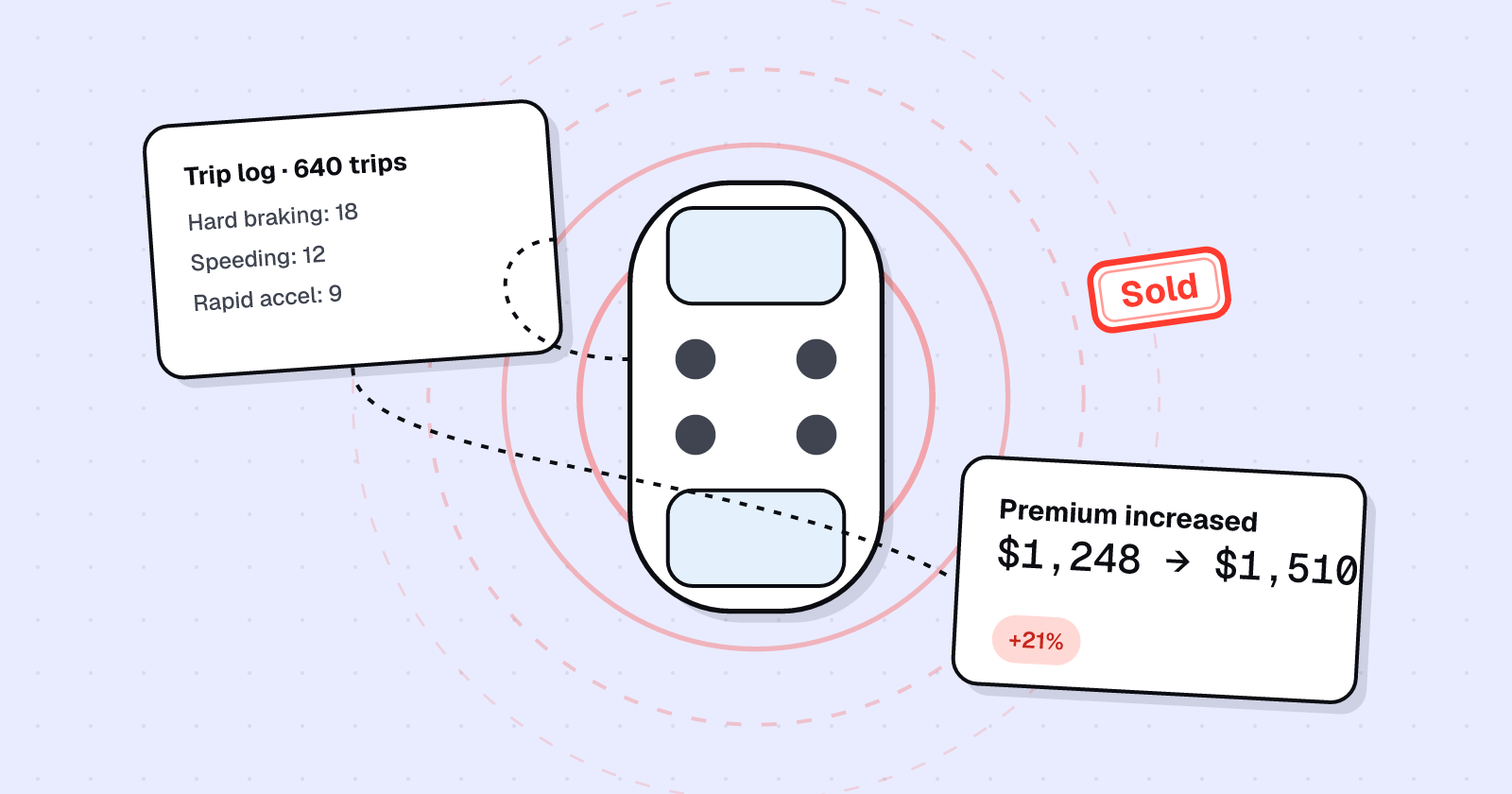
- In 2024, The New York Times reported on a Chevy Bolt driver whose 258-page LexisNexis report had 640 trips with hard braking and speeding data from GM's OnStar Smart Driver. GM stopped sharing the data in March 2024. In January 2026, the FTC finalized an order banning GM from sharing driver data with consumer reporting agencies for five years.
- Your LexisNexis consumer disclosure report can include real estate records, liens, judgments, bankruptcies, professional licenses, historical addresses, and C.L.U.E. insurance claims (up to seven years of auto and property claims).
Last updated: October 25, 2026
You can request your free LexisNexis consumer disclosure report online at consumer.risk.lexisnexis.com/request, by phone (1-866-897-8126), or by mail. Provide your name, date of birth, address, and your Social Security number or driver's license number and state (at least one is required). LexisNexis says to allow about two weeks, then a letter arrives by U.S. mail with a URL and a PIN that opens your encrypted report.
A LexisNexis security freeze is free and separate (consumer.risk.lexisnexis.com/freeze). It only applies at LexisNexis, not at Equifax, Experian or TransUnion.
Quick answer: Request your free LexisNexis consumer disclosure report at consumer.risk.lexisnexis.com/request. Enter your name, date of birth, current address, and your SSN or driver's license number and state. Email is optional but must be provided and verified to include email-linked data in your report. Allow about two weeks for a letter with a URL and PIN to arrive. The report can include real estate records, liens, judgments, bankruptcies, professional licenses, historical addresses, C.L.U.E. insurance claims, and in some cases, driving data from connected cars. To place a free LexisNexis security freeze, go to consumer.risk.lexisnexis.com/freeze (online, mail, or phone 1-800-456-1244). The freeze only covers LexisNexis, not Equifax, Experian or TransUnion.
Every fact below comes from LexisNexis Risk Solutions' official consumer pages (accessed October 25, 2026), the Consumer Financial Protection Bureau, Washington State Office of the Insurance Commissioner, The New York Times reporting (March 2024), and the FTC final order against GM (January 2026). Nora Price and all records shown in the video are fictional.
Watch: LexisNexis report request explained
If you've heard about the 258-page LexisNexis file with car data, or you just want to see what LexisNexis knows about you, this video walks through the free report request step by step, what C.L.U.E. is, how driving data ended up in files, and the free LexisNexis freeze.
How do I request my LexisNexis report?
LexisNexis Risk Solutions is a consumer reporting agency. You're entitled to one free LexisNexis consumer disclosure report every 12 months under the FACT Act, per the Consumer Financial Protection Bureau.
You can request it online, by phone, or by mail. The online request is fastest.
Step 1: Go to the LexisNexis consumer request page
Go to consumer.risk.lexisnexis.com/request. You may see a reCAPTCHA check before the form loads.
Step 2: Enter your name, date of birth, and current address
Enter your first name, middle name (if any), last name, date of birth, and your current resident address (street, city, state, ZIP code). Per LexisNexis's Online Request Form Instructions, this information is required to submit a report request.
Step 3: Add your Social Security number or driver's license number and state
LexisNexis requires at least one of these to process your report request. According to the Online Request Form Instructions, you must provide "either SSN or Driver's License and State" to submit a report.
Enter your Social Security number, or your driver's license number and the state that issued it.
Step 4: Provide an email address (optional, but recommended)
Email is optional. However, per LexisNexis's online request form, "Email is optional but must be provided and verified to include email-linked data in your report."
If you want your report to include any data associated with your email address, enter your email and verify it when LexisNexis sends you a verification link.
Step 5: Tick "Request Your Consumer Disclosure Report" and submit
Check the box next to "Request Your Consumer Disclosure Report." Complete the reCAPTCHA check ("I'm not a robot"). Then click "Submit Request."
Step 6: Wait about two weeks for your letter
Per the Online Request Form Instructions, "please allow approximately two weeks for processing."
You will receive a letter by U.S. mail containing a PIN and a URL. Open the URL in your browser, enter the PIN from the letter, and download your report. The report is an encrypted PDF. Use the same PIN as the PDF password.
Requesting by phone or mail
You can also request your LexisNexis consumer disclosure report by phone (1-866-897-8126) or by mail. To request by mail, print and complete the form from consumer.risk.lexisnexis.com/request and mail it to LexisNexis Risk Solutions, P.O. Box 105108, Atlanta, GA 30348-5108.
What is in a LexisNexis consumer disclosure report?
Per LexisNexis's Consumer Disclosure page, "The report includes items such as real estate transaction and ownership data, lien, judgment, and bankruptcy records, professional license information, and historical addresses."
Residents of states including California, Colorado, Connecticut, Delaware, Indiana, Iowa, Kentucky, Maryland, Minnesota, Montana, Nebraska, New Hampshire, New Jersey, Oregon, Rhode Island, Tennessee, Texas, Utah, and Virginia also receive a State Privacy Act Report, per the Online Request Form Instructions.
Your report may also include C.L.U.E. insurance claims data and, in some cases, driving data from connected car features (more on that below).
What is a C.L.U.E. report?
C.L.U.E. stands for Comprehensive Loss Underwriting Exchange. It's a LexisNexis database of insurance claims. Per Washington State Office of the Insurance Commissioner, C.L.U.E. "generally contains up to seven years of personal-auto and personal-property claims history."
The data includes:
- Your name
- Date of birth
- Policy number
- Date of the loss
- Type of loss
- Amount the insurer paid
- Property or vehicle information
Per Washington's Insurance Commissioner, "An insurer may request a CLUE report when you apply for coverage or request a quote."
If you find an error in your C.L.U.E. report, you can dispute it. Per Washington's Insurance Commissioner, "LexisNexis will verify your information with the reporting insurance company and notify you of the results within 30 days. You can also add an explanation to an item in the report that will show in all future reports."
Can my car's driving data be in my LexisNexis file?
Your car's driving data can be in your LexisNexis file, but it depends on whether you used a connected car feature that shared data with LexisNexis.
In March 2024, The New York Times reported on a Chevrolet Bolt driver whose insurance rate jumped 21% in 2022. When he requested his LexisNexis consumer disclosure report, it came back 258 pages long. More than 130 of those pages listed 640 trips over six months, each with start and end times, distance traveled, hard braking events, and rapid acceleration. According to the report, the trip details had been provided by General Motors.
How did driving data get into LexisNexis files?
The data came from OnStar Smart Driver, a feature in GM's connected car apps. Per The New York Times, GM confirmed it shared "select insights" about hard braking, hard accelerating, speeding over 80 mph, and drive time of Smart Driver enrollees with LexisNexis and Verisk (another data broker).
Later that month, GM announced that it had stopped sharing OnStar Smart Driver data with LexisNexis and Verisk.
The FTC order against GM
In January 2026, the Federal Trade Commission finalized an order that includes:
- A five-year ban on GM disclosing consumers' geolocation and driver behavior data to consumer reporting agencies
- A requirement for affirmative express consent before any future data sharing
- A way for consumers to request a copy of their data and request deletion
The FTC's final order applies only to GM and OnStar. Other automakers are not covered by this order.
How to check if your file contains driving data
Request your free LexisNexis consumer disclosure report at consumer.risk.lexisnexis.com/request. When your report arrives, look for sections that mention:
- Trip logs or trip history
- Driving data or driving behavior
- Telematics data
- Vehicle location history
- Hard braking, hard acceleration, or speeding events
If you find driving data in your report that's wrong or shouldn't be there, you can dispute it under the Fair Credit Reporting Act. Contact information for disputes is included with your report.
How do I freeze my LexisNexis file?
A LexisNexis security freeze is free. Per LexisNexis's Security Freeze page, "Applying a security freeze prohibits LexisNexis Risk Solutions from releasing your LexisNexis Consumer Disclosure Report or your credit score without your express authorization."
How to place a LexisNexis security freeze
You can request a LexisNexis security freeze online, by mail, or by phone.
Online: Go to consumer.risk.lexisnexis.com/freeze and complete the online form.
By mail: Mail your request to LexisNexis Risk Solutions Consumer Center, Attn: Security Freeze, P.O. Box 105108, Atlanta, GA 30348-5108.
By phone: Call 1-800-456-1244.
Per LexisNexis, it "does not charge a fee to apply, lift, or remove a security freeze." You'll receive a confirmation letter by U.S. Mail. The letter includes a PIN. Keep your PIN. You'll need it to lift or remove the freeze later. If you lose your PIN, you can order a replacement.
What the LexisNexis freeze does and doesn't cover
The LexisNexis security freeze applies only at LexisNexis. Per the Security Freeze page, it "will only be in place at LexisNexis Risk Solutions and not other credit reporting agencies, such as TransUnion, Equifax, Experian, Innovis or others."
The freeze also "does not apply to companies or entities with which you have an existing account that requests information in your consumer report for the purposes of reviewing or collecting the account."
To freeze your file at Equifax, Experian, and TransUnion, you must place a separate freeze with each of those credit reporting agencies.
Does a LexisNexis freeze also freeze Equifax, Experian and TransUnion?
No. A LexisNexis security freeze only covers LexisNexis Risk Solutions. Per LexisNexis, it "will only be in place at LexisNexis Risk Solutions and not other credit reporting agencies, such as TransUnion, Equifax, Experian, Innovis or others."
If you want a freeze at Equifax, Experian, and TransUnion, you must place a separate security freeze with each of those agencies. Each freeze is free.
How do I dispute something on my LexisNexis report?
You have the right to dispute inaccurate information under the Fair Credit Reporting Act. Your LexisNexis consumer disclosure report includes instructions for disputes along with contact information.
For C.L.U.E. claims data, per Washington's Insurance Commissioner, "LexisNexis will verify your information with the reporting insurance company and notify you of the results within 30 days."
You can also add an explanation to an item on your C.L.U.E. report. Per Washington's Insurance Commissioner, the explanation "will show in all future reports."
How do I opt out of LexisNexis prescreened offers and marketing?
LexisNexis offers an opt-out page at consumer.risk.lexisnexis.com/opt.
Per LexisNexis, you can opt out of:
- Firm Offers of Credit and Insurance (Prescreen)
- Direct Marketing Services
- Suppression due to threat of personal safety
This opt-out is separate from the security freeze and the consumer disclosure report request.
What this means for your data
LexisNexis is one data broker. Your name, address, phone number, and other personal information also sit on people-search sites and data brokers you have never heard of.
If you drove a GM vehicle with OnStar Smart Driver turned on between 2022 and March 2024, your trip data may be in a LexisNexis file right now. Request your free report to see what's there.
But that's just LexisNexis. Dozens of other people-search sites and data brokers list your name, address, phone number, relatives, and more. Each one sells access to anyone willing to pay. That's how scammers, stalkers, and spammers find you.
Our guide on how scammers use data brokers explains the real-world harm. Why data brokers re-list you after opt-out explains why one-time removals don't last.
UndoLeak erases your data from data brokers and keeps it off. We re-check and erase it again when it comes back.
Check your data free to see where you're exposed right now. The first scan is free.
California DROP: one request to 600+ brokers
If you or your family live in California, you have the strongest tool in the country.
DROP (at privacy.ca.gov/drop) sends one free deletion request to more than 600 registered data brokers. Since August 1, 2026, brokers must check DROP at least every 45 days and keep deleting you.
Our California DROP guide walks through how to file and what each status means.
Related guides
- Is Your Car Tracking You for Insurance? The OnStar Data Sharing Case - deep dive on the GM/OnStar case
- How scammers use data brokers - why your data matters
- Why data brokers re-list you after opt-out - why listings come back
- How to remove personal information from the internet - 15-site pillar guide
- BeenVerified opt out - another people-search site removal
- Intelius opt out - one form covers four sites
- How to remove your phone number from people-search sites - stop spam calls
Sources
- LexisNexis Risk Solutions, Consumer Disclosure: consumer.risk.lexisnexis.com/consumer (accessed October 25, 2026)
- LexisNexis Online Request Form: consumer.risk.lexisnexis.com/request (accessed October 25, 2026)
- LexisNexis Online Request Form Instructions: consumer.risk.lexisnexis.com/img/Online_Request_Form_Instructions.pdf (accessed October 25, 2026)
- LexisNexis Security Freeze: consumer.risk.lexisnexis.com/freeze (accessed October 25, 2026)
- LexisNexis Opt-Out: consumer.risk.lexisnexis.com/opt (accessed October 25, 2026)
- LexisNexis FACT Act disclosure: consumer.risk.lexisnexis.com/factact (accessed October 25, 2026)
- Consumer Financial Protection Bureau, LexisNexis Risk Solutions: consumerfinance.gov/consumer-tools/credit-reports-and-scores/consumer-reporting-companies/companies-list/lexis-nexis-risk-solutions/ (accessed October 25, 2026)
- Washington State Office of the Insurance Commissioner, CLUE: insurance.wa.gov/insurance-resources/auto-insurance/credit-and-insurance/clue-comprehensive-loss-underwriting-exchange (accessed October 25, 2026)
- The New York Times, Kashmir Hill, "Automakers Are Sharing Consumers' Driving Behavior With Insurance Companies" (March 11, 2024): nytimes.com/2024/03/11/technology/carmakers-driver-tracking-insurance.html
- The New York Times, "General Motors Quits Sharing Driving Behavior With Data Brokers" (March 22, 2024): nytimes.com/2024/03/22/technology/gm-onstar-driver-data.html
- FTC, "FTC Finalizes Order Settling Allegations that GM and OnStar Collected and Sold Geolocation Data Without Consumers' Informed Consent" (January 14, 2026): ftc.gov/news-events/news/press-releases/2026/01/ftc-finalizes-order-settling-allegations-gm-onstar-collected-sold-geolocation-data-without-consumers
Nora Price, her address, phone number, and every record shown in the video are fictional. All LexisNexis and report screens in the video are simplified recreations, not screenshots. This is general information, not legal advice.
Frequently asked questions
How do I request my LexisNexis report?
Go to consumer.risk.lexisnexis.com/request, enter your name, date of birth and current address, add your Social Security number or driver's license number and state (at least one is required), provide an email if you want email-linked data included, tick Request Your Consumer Disclosure Report, complete the reCAPTCHA, and submit. Allow about two weeks. You'll get a letter by U.S. mail with a URL and a PIN that opens your encrypted PDF report.
What is in a LexisNexis consumer disclosure report?
Per LexisNexis, the report includes real estate transaction and ownership data, lien, judgment, and bankruptcy records, professional license information, and historical addresses. Residents of states like California, Texas, and Virginia also receive a State Privacy Act Report. It may also include C.L.U.E. insurance claims data and, in some cases, driving data from connected car features.
Is the LexisNexis report free?
Yes. You're entitled to one free LexisNexis consumer disclosure report every 12 months under the FACT Act, per the Consumer Financial Protection Bureau.
How long does a LexisNexis report request take?
LexisNexis says to allow approximately two weeks for processing. You receive a letter by U.S. mail containing a PIN and a URL. Use the PIN to open the encrypted PDF report.
What is a C.L.U.E. report?
C.L.U.E. (Comprehensive Loss Underwriting Exchange) is a LexisNexis database of insurance claims. Per Washington's Insurance Commissioner, it generally contains up to seven years of personal auto and property claims history, including your name, date of birth, policy number, date and type of loss, amount paid, and vehicle or property information. Insurers may pull it when you apply for coverage or request a quote.
Can my car's driving data be in my LexisNexis file?
It can be. In 2024, The New York Times reported on a Chevy Bolt driver whose 258-page LexisNexis report included 640 trips with hard braking and speeding data from GM's OnStar Smart Driver. GM stopped sharing that data in March 2024, and in January 2026 the FTC banned GM from sharing driver data with consumer reporting agencies for five years. To see if your file contains driving data, request your free report.
How do I freeze my LexisNexis file?
Go to consumer.risk.lexisnexis.com/freeze to request a LexisNexis security freeze online, or mail LexisNexis Risk Solutions Consumer Center, Attn: Security Freeze, P.O. Box 105108, Atlanta, GA 30348-5108, or call 1-800-456-1244. It's free to place, lift, or remove. You'll receive a confirmation letter by mail with a PIN. Keep your PIN to lift or remove the freeze later.
Does a LexisNexis freeze also freeze Equifax, Experian and TransUnion?
No. Per LexisNexis, a security freeze will only be in place at LexisNexis Risk Solutions and not at other credit reporting agencies like TransUnion, Equifax, Experian, or Innovis. You must freeze each separately.
How do I dispute something on my LexisNexis report?
Under the Fair Credit Reporting Act, you can dispute inaccurate information. Per Washington's Insurance Commissioner, for C.L.U.E. claims data, LexisNexis verifies the information with the reporting insurance company and notifies you of the results within 30 days. You can also add an explanation to an item in your report that will show in all future reports. Contact information for disputes is included with your report.
How do I opt out of LexisNexis prescreened offers and marketing?
Go to consumer.risk.lexisnexis.com/opt. The opt-out page covers prescreened offers of credit and insurance, direct marketing services, and suppression due to threat of personal safety.
undoleak Team