Free tool
Free people-search check
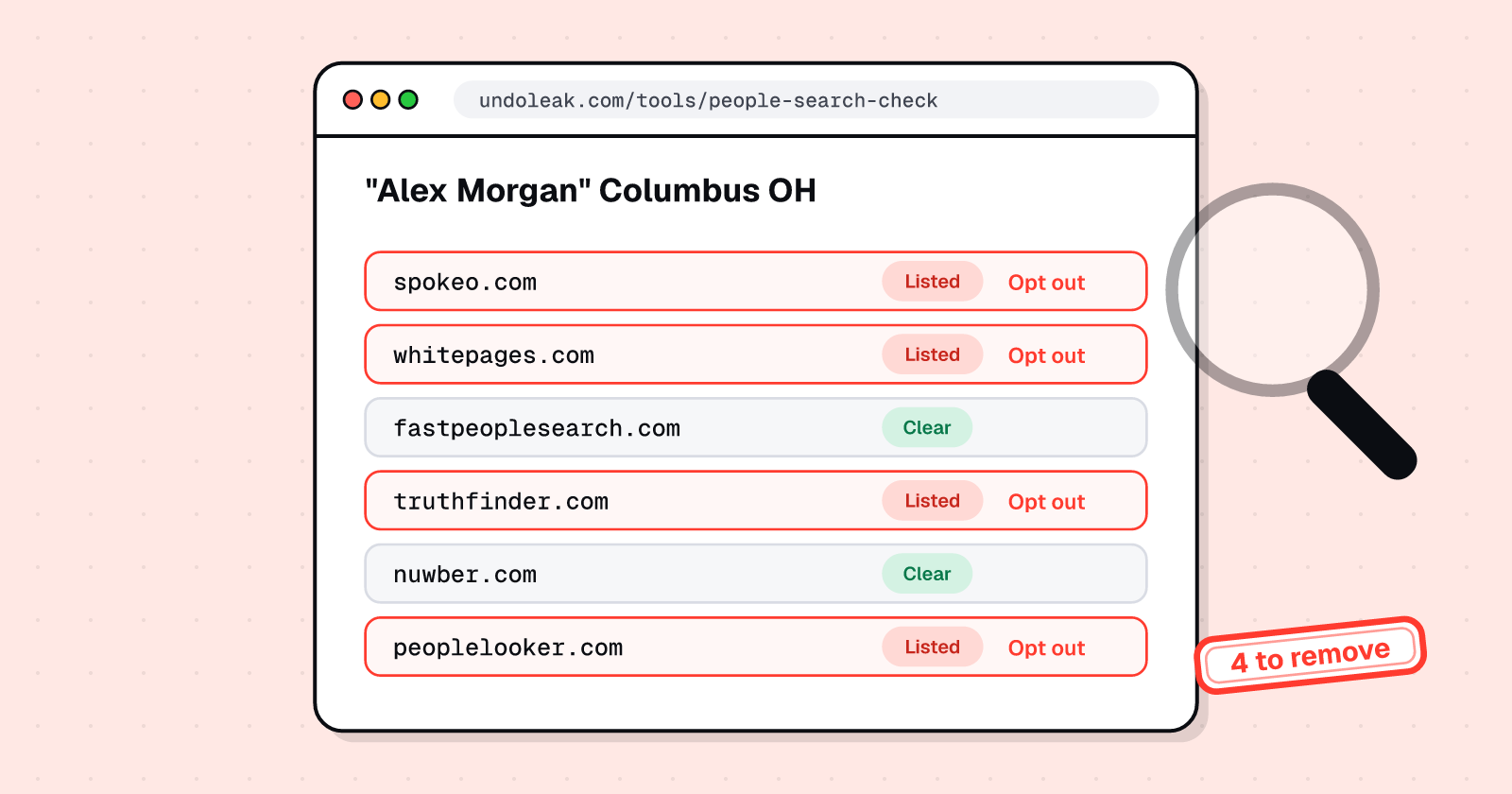
Search 39 people-search sites for your name, with an opt-out link for each.
Check whether a password shows up in known data breaches. It's checked privately: your password never leaves this page.
Your password is never sent anywhere. Your browser turns it into a SHA-1 hash, a fixed string of characters that can't be turned back into the password, and sends only the first 5 characters of that hash to the free Pwned Passwords service from Have I Been Pwned. The service returns every leaked hash that starts with those 5 characters, hundreds of them, and your browser checks the list on its own. Nobody, including us, learns your password or even its full hash. This method is called k-anonymity.
A leaked password usually means one of the sites you used was breached, not that your device was hacked.
Yes. The password never leaves your browser. Only the first 5 characters of its SHA-1 hash are sent, which can match hundreds of different passwords.
From Have I Been Pwned's free Pwned Passwords service, which holds hundreds of millions of passwords exposed in real data breaches.
It hasn't appeared in a known breach, which is good, but that doesn't make it strong. Short or reused passwords are still easy to guess.
No one can delete a breach once it's out. What helps is changing the password and turning on two-factor authentication. undoleak flags breached passwords so you know which to change.