How Scammers Know Your Mom's Name (And Use Data Brokers to Target You)
How scammers use people-search sites to run fake-relative calls, phishing messages that know your address, and worse. What they see, and how to erase it.

Key takeaways
- One people-search listing connects your name to your phone, your address, and your family. For you, that's a privacy problem. For a scammer, it's a script.
- Americans lost $3.5 billion to imposter scams in 2025, the most reported fraud for nine years running. For people over 60, phone scams have the highest median losses.
- Three lines on a people-search site turn a random robocall into a call that sounds like family - your phone, your address, your relatives. Erase them, and the scammer is back to guessing.
"Mom, it's me. I'm in trouble. Please don't tell Dad."
That wasn't her daughter. It was a stranger, reading from a people-search listing.
Three lines on that listing turn a random robocall into a call that sounds like family. By the end of this guide, you'll know which three, and how to erase them.
Quick answer: People-search sites sell your phone, address, age and relatives to anyone willing to pay. That data powers fake-relative calls, phishing messages that know your street, and worse. Start by erasing your listing from the 11 sites named in the June 2025 FBI affidavit (TruePeopleSearch, Spokeo, Whitepages, BeenVerified, Pipl, PeopleFinders, TruthFinder, Intelius, Ownerly, USsearch, PeopleLooker), then work through the rest. Erase your parents' and kids' listings too - the FTC says your info can show up on a relative's report. Pick a family safe word, hang up and call back on saved numbers, and never pay in gift cards, wire or crypto.
Every fact below comes from the FTC, FBI, FCC, court documents or news reports. Last checked October 19, 2026.
What a scammer actually sees
The FTC's explanation
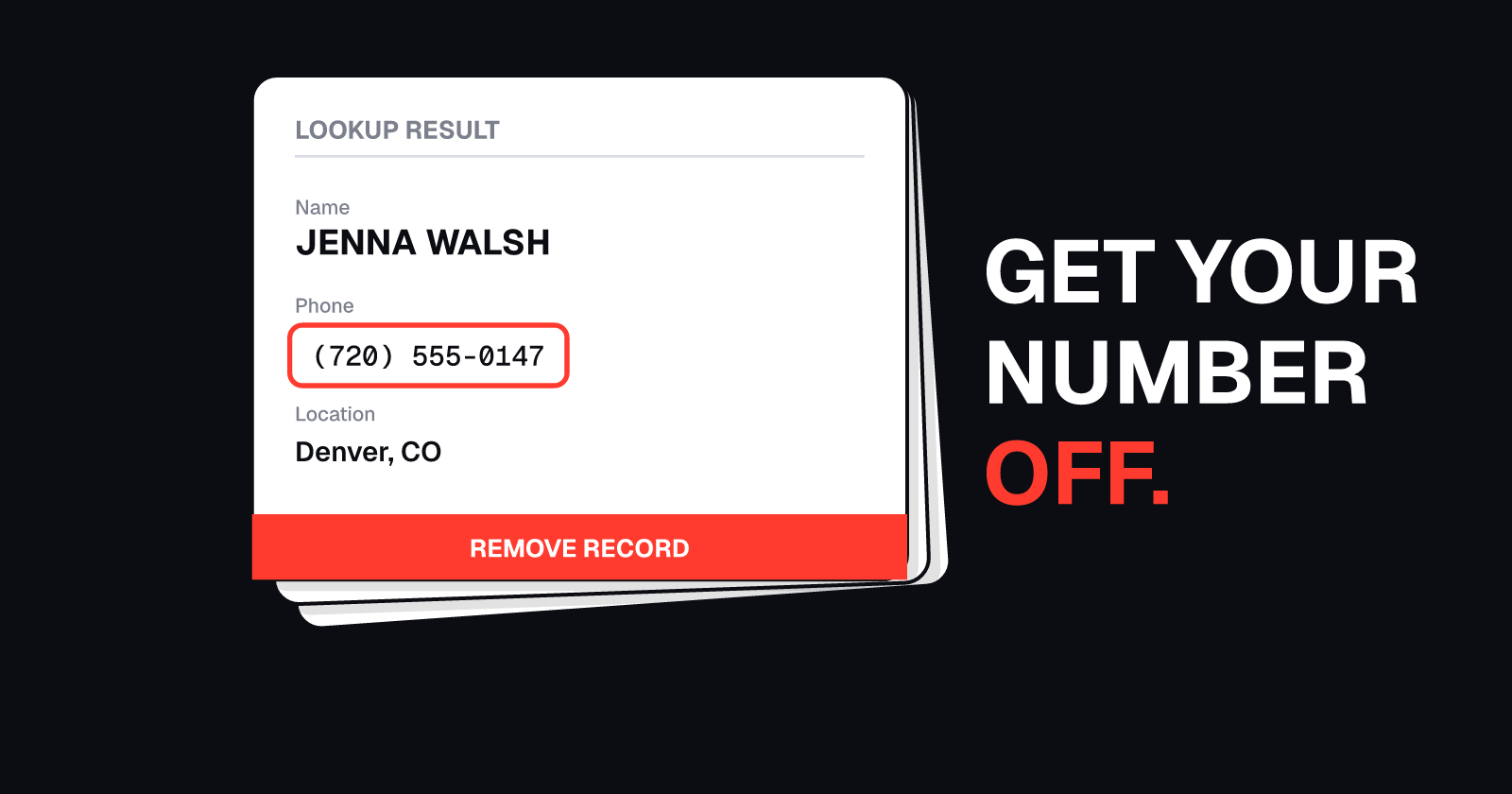
The FTC says people-search sites buy data from other brokers, scrape public social media, and pull government records like property and voter files. Then they sell the report to anyone willing to pay (FTC).
With just your name or phone number, someone can buy:
- Your age
- Your current and previous addresses
- The names and addresses of your family members
One page connects your name to your phone, your address, and your family.
For you, that's a privacy problem. For a scammer, it's a script.
Fake-relative calls: the script
Three lines from a people-search listing
Here's the script. The caller already knows:
- Your mother's name (Anita)
- Your mother's phone number
- That her daughter is named Priya
That's three lines, straight off the listing, from the "relatives" or "associates" section.
Add a cloned voice
Now add a voice. The FTC warns scammers can clone a loved one's voice from a short audio clip posted online (FTC, March 2023).
So now it sounds like Priya, too.
The pressure
Then comes the pressure:
- Urgent: "I'm in trouble. I need money now."
- Secret: "Please don't tell Dad."
- Untraceable payment: Wire, crypto, a payment app, or gift cards
The FTC says those are the tells - urgency, secrecy, and payment methods that can't be reversed (FTC).
The FCC adds that scammers often spoof caller ID to show a local or familiar number (FCC).
The scale
And it works.
Americans reported losing $3.5 billion to imposter scams in 2025. It has been the most reported fraud category for nine years running (FTC, June 2026).
For people over 60, the FBI logged $7.7 billion in reported losses in 2025, up 59% from the prior year (FBI IC3 2025 report).
And for older adults, the FTC says scams that start with a phone call have the highest median losses (FTC, Protecting Older Consumers 2024-2025).
That's why your parents' phone number matters as much as yours.
Phishing messages that know where you live
The detail that makes it feel real
A bank alert that says "Dear customer" is easy to ignore.
One that says "Priya Nolan, 1428 Alder Court" feels real.
That's the point.
Business impersonation: nearly a billion dollars
The FTC says some of the costliest impersonation scams start with a fake security alert, often from a bank. Business impersonators, led by fake banks, took nearly a billion dollars in 2025 (FTC, June 2026).
Security questions
And those security questions banks and password resets ask?
- Your mother's name
- The street you grew up on
A people-search listing answers half of them for free.
The FCC says never give that kind of detail to an unexpected caller (FCC).
The front door: when it goes beyond a call
Most of us will never face this. But the risk is real enough that it shaped a law.
July 2020: Judge Esther Salas
In July 2020, a man who had compiled personal information on federal judge Esther Salas came to her front door in New Jersey, posing as a delivery driver. He killed her 20-year-old son, Daniel, and shot her husband (NBC News, Nov 23, 2020).
Months later, New Jersey passed Daniel's Law, making it a crime to publish the home addresses and phone numbers of judges, prosecutors and police officers (NBC News).
June 2025: Minnesota lawmakers
In June 2025, investigators in Minnesota searched the vehicle of the suspect in the shootings of two state lawmakers. According to the FBI affidavit, one of his notebooks listed eleven people-search sites (FBI affidavit, D. Minn. 0:25-mj-00376, June 15, 2025):
- TruePeopleSearch
- Spokeo
- Pipl
- PeopleFinders
- BeenVerified
- Whitepages
- TruthFinder
- Intelius
- Ownerly
- USsearch
- PeopleLooker
The affidavit doesn't say which address came from which site. But it shows where he went looking.
WIRED reported that the targets' addresses were also on campaign and legislative pages, so we can't attribute any single address to a people-search site alone (WIRED, June 2025).
Most of us will never face anything like that. Still, anyone who has your address can find your door.
The fix: two layers
Layer 1: Protect the call
- Pick a family safe word. The FCC recommends this. If a family member calls in a panic, hang up and call back on the number saved in your phone (FCC).
- Hang up and call back. Don't trust caller ID. Scammers spoof it.
- Never pay in gift cards, wire or crypto. Those are the payment methods scammers demand because they're untraceable (FTC).
Layer 2: Shrink the script
Erase your listing from the big people-search sites. Then erase your parents' and kids' listings too. The FTC notes your info can still show up on a relative's report (FTC).
Start with the 11 from that notebook
If they were on his list, they belong on yours:
| Site | Opt-out page | What you need |
|---|---|---|
| TruePeopleSearch | truepeoplesearch.com/removal (guide) | Name + email, click link within 24h |
| Spokeo | spokeo.com/optout | Listing URL + email |
| Pipl | See main removal guide | Opt-out form on the site |
| PeopleFinders | Help article with form link | Online form or phone (800) 718-8997 |
| BeenVerified | beenverified.com/app/optout/search | Name search + email |
| Whitepages | whitepages.com/suppression-requests | Listing URL + phone verification |
| TruthFinder | truthfinder.com/opt-out (redirects to PeopleConnect) | Email, then pick your report |
| Intelius | suppression.peopleconnect.us | Same as TruthFinder |
| Ownerly | See main removal guide | Opt-out form on the site |
| USsearch | suppression.peopleconnect.us | Same as TruthFinder |
| PeopleLooker | peoplelooker.com/svc/optout/search/optouts | Name search + email |
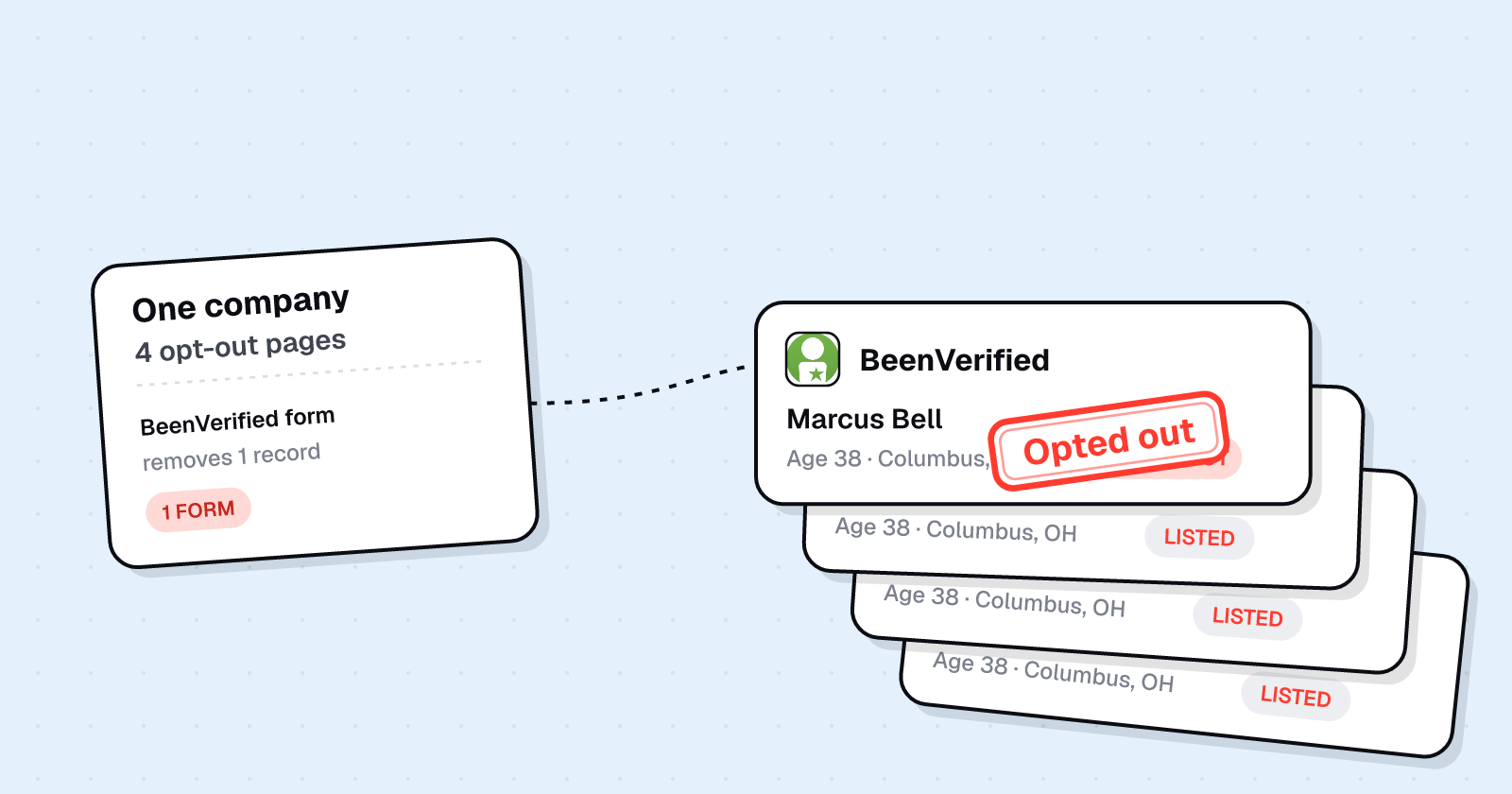
Good news: One PeopleConnect Suppression Center request covers TruthFinder, Intelius, USSearch and Instant Checkmate. That's four sites with one form.
Our main removal guide has the full 15 biggest sites with opt-out instructions for each.
Then re-check
The FTC says your info can reappear when your public records change (FTC). A move, a new phone number, a property purchase - these create new records brokers copy.
One pass is not a fix. Treat it as twice-a-year maintenance, or every three months if you're at higher risk.
Our guide on why listings come back after you opt out explains the five reasons it happens and how to make an opt-out stick.
If a call like this already happened
Report it at ReportFraud.FTC.gov.
The FTC uses fraud reports to bring cases against scammers and the companies that enable them. Your report matters.
Protect your parents
Older adults are disproportionately targeted and suffer higher losses.
The FBI's 2025 report shows people over 60 filed 201,266 complaints, a 37% increase, with $7.7 billion in losses, up 59%. The average loss was $38,500 (FBI IC3 2025 report; FBI Elder Fraud summary).
What to do
- Search their names on the 11 sites above and Google.
- Opt out of their listings, especially ones that list you as a relative.
- Talk about the warning signs:
- Urgency and secrecy
- Payment by wire, crypto, payment app or gift cards
- A caller who knows names but won't let you call back on a known number
- Set a family safe word the real family knows.
- Verify every "family emergency" call by hanging up and calling back on a saved number.
The FCC's guide on grandparent scams goes deeper.
California DROP: one request to 600+ brokers
If you or your parents live in California, you have the strongest tool in the country.
DROP (at privacy.ca.gov/drop) sends one free deletion request to more than 600 registered data brokers. Since August 1, 2026, brokers must check DROP at least every 45 days and keep deleting you (CalPrivacy).
Our DROP guide walks through how to file and what each status means.
Recap: three lines
Three lines on a people-search site:
- Your phone
- Your address
- Your relatives
Erase them, and the scammer is back to guessing.
Search your own name tonight. Then search your parents'. You might be surprised what's out there.
Sources
- FTC Consumer Advice, What To Know About People Search Sites That Sell Your Information
- FTC press release, June 15, 2026: $3.5B imposter-scam losses in 2025
- FTC consumer alert, May 2026: 1M+ imposter reports in 2025; #1 scam for ninth year
- FTC, Fake emergency scams
- FTC alert (March 2023): Scammers use AI to enhance their family emergency schemes
- FTC, Protecting Older Consumers 2024-2025 (Dec 2025)
- FBI IC3 2025 report / Elder Fraud (Apr 2026): 60+ = 201,266 complaints (+37%), $7.748B losses (+59%); FBI Elder Fraud summary
- FCC, Grandparent scams get more sophisticated
- FCC, Deep-fake audio and video links make robocalls and scam texts harder to spot
- NBC News (Nov 23, 2020): Judge Esther Salas speaks about Daniel's Law
- FBI affidavit, D. Minn. 0:25-mj-00376 (filed June 15, 2025), ¶32-33: PDF at DocumentCloud
- WIRED (June 2025): Minnesota lawmaker shootings and people-search data brokers
- California Privacy Protection Agency (CalPrivacy), DROP
Frequently asked questions
How do scammers get information about me and my family?
People-search sites buy data from other brokers, scrape public social media, and pull government records like property and voter files. With just your name or phone number, someone can buy your age, current and previous addresses, and the names and addresses of your family members.
Can scammers really clone someone's voice from social media?
Yes. The FTC warns scammers can clone a loved one's voice from a short audio clip posted online. Combined with data from a people-search site, a call can sound like your daughter and know your daughter's name.
What is a grandparent scam?
A scammer calls pretending to be your grandchild in trouble and needing money urgently. The FCC says scammers mine social media or buy data to find names and relationships, then spoof caller ID and sometimes use voice cloning. They pressure you to keep it secret and pay by wire, crypto, payment app or gift cards.
How much money do people lose to imposter scams?
Americans reported losing $3.5 billion to imposter scams in 2025, according to the FTC. It has been the most reported fraud category for nine years running. For people over 60, the FBI logged $7.7 billion in reported losses in 2025, up 59% from the prior year.
Why do phishing messages use my real address?
To make the message feel real. A bank alert that says "Dear customer" is easy to ignore. One that says your full name and street address looks legitimate. That level of detail comes from a people-search listing or a data breach.
Can someone find my home address from a people-search site?
Yes. Most people-search sites show current and past home addresses, often with a map. Anyone who has your address can find your door. Law enforcement, judges and prosecutors are sometimes protected by state laws like New Jersey's Daniel's Law.
What should I do if I get a call from someone claiming to be family?
Hang up and call back on the number saved in your phone. The FCC recommends setting a family safe word that only your real family knows. Never pay anyone in gift cards, wire transfers or crypto - those are the tells, according to the FTC.
How do I protect my parents from these scams?
Erase their listings from people-search sites along with yours. The FTC notes your info can still show up on a relative's report, so opt out of their pages too. Talk about safe words and the warning signs - urgency, secrecy, and payment by wire or gift cards.
Which people-search sites should I remove myself from first?
Start with the 11 sites named in the FBI affidavit from the June 2025 Minnesota case - TruePeopleSearch, Spokeo, Whitepages, BeenVerified, Pipl, PeopleFinders, TruthFinder, Intelius, Ownerly, USsearch, PeopleLooker. Then work through the rest of the top 15 in our main removal guide.
Can I stop scammers from getting my information entirely?
No, but you can make it much harder. Brokers can rebuild profiles from new public records, but removing your listings cuts off the easy lookups that feed most scams. Think of it as locking your front door - it won't stop a determined attacker, but it stops casual opportunists.
undoleak Team