Your License Plate Is in a Police Network: How Flock ALPR Cameras Work, and How to Check for Ones Near You
Flock scans 20 billion plates per month. 75% of agencies share without warrants. Find cameras near you and erase your address from people-search sites.

Key takeaways
- Flock Safety contracts with more than 5,000 law enforcement agencies and scans over 20 billion license plates per month, as reported by NBC News citing Flock's website.
- More than 75% of those offices opt into Flock's live national database, which allows agencies across the country to view plate numbers, locations, directions and times of recording without warrants, according to what Flock told Sen. Ron Wyden's office as reported by NBC.
- ALPRs also capture make, model, color and identifying features such as dents, roof racks and bumper stickers, often as searchable data points.
- There is no consumer opt-out for driving on public roads. You can check Deflock.org to see reported ALPR camera locations near you.
Your license plate was just scanned. The camera logged your plate number, where you were, when you passed, and what your car looks like.
Flock Safety contracts with more than 5,000 law enforcement agencies and scans over 20 billion license plates per month, Kevin Collier reported for NBC News in November 2025, citing Flock's website. More than 75% of those offices opt into Flock's live national database, which allows agencies across the country to view plate numbers, locations, directions and times of recording without warrants, according to what Flock told Sen. Ron Wyden's office as reported by NBC.
These cameras don't just read plates. Deflock.org, an open-source community map of ALPR cameras, notes that ALPRs also capture make, model, color and identifying features such as dents, roof racks and bumper stickers, often as searchable data points.
There is no consumer opt-out for driving on public roads. But you can check Deflock.org to see where cameras are near you, and you can erase the name and home address that people-search sites attach to you.
UndoLeak erases your data from data brokers and keeps it off.
Last updated: November 5, 2026
What are Flock Safety license plate cameras?
Flock Safety makes automated license plate readers (ALPRs) that scan passing vehicles on public roads. According to NBC News reporting from November 2025, Flock contracts with more than 5,000 law enforcement agencies and scans over 20 billion license plates per month, per Flock's website as reported.
The cameras are typically mounted on poles near roads and intersections. They capture still images of each passing vehicle.
What do ALPR cameras capture?
Automated license plate readers capture more than just your plate number. According to Deflock.org and the ACLU's 2025 guide on fighting ALPR deployment, these cameras log:
- License plate number
- Make, model, and color
- Location and direction of travel
- Time and date
- Identifying features like dents, roof racks, and bumper stickers
Many of these details become searchable data points, creating what Flock calls a "Vehicle Fingerprint," a term discussed in Institute for Justice Senate testimony on September 23, 2026.
Do police share ALPR data across jurisdictions?
Yes. According to what Flock told Sen. Ron Wyden's office as reported by NBC News, more than 75% of agencies that use Flock opt into the company's live national database. This database allows participating agencies across the country to view plate numbers, locations, directions and times of recording without warrants.
This statement represents what Flock told the Senator's office as reported by NBC and is not a court holding.
How to find ALPR cameras near me
There is no official public map of ALPR camera locations, but you can check reported locations on community-maintained resources.
Step 1: Open Deflock.org
Deflock.org (also available at Deflock.me) is an open-source, community-maintained map of ALPR camera locations. The ACLU's 2025 guide "How to Fight Deployment of Flock Safety and Similar Automated License Plate Readers" lists Deflock.org as a crowdsourced resource for finding reported camera locations.
Step 2: Search your street or city
Enter your address, street name, or city into the search field on Deflock.org. The map will show reported ALPR camera locations near where you drive.
Step 3: Note there is no consumer opt-out
You cannot opt out of ALPR tracking on public roads. The cameras scan every passing vehicle. If you drive on a monitored road, the camera logs your vehicle.
Step 4: Check local policy and resources
For information about ALPR deployment and data retention policies in your area, contact your city council or police department. The ACLU provides resources on how to fight deployment of Flock Safety and similar automated license plate readers in your community.
What can you actually erase?
You can't erase a camera's scan or delete yourself from the ALPR database. But you can erase what makes it easy for anyone to connect your plate to your front door.
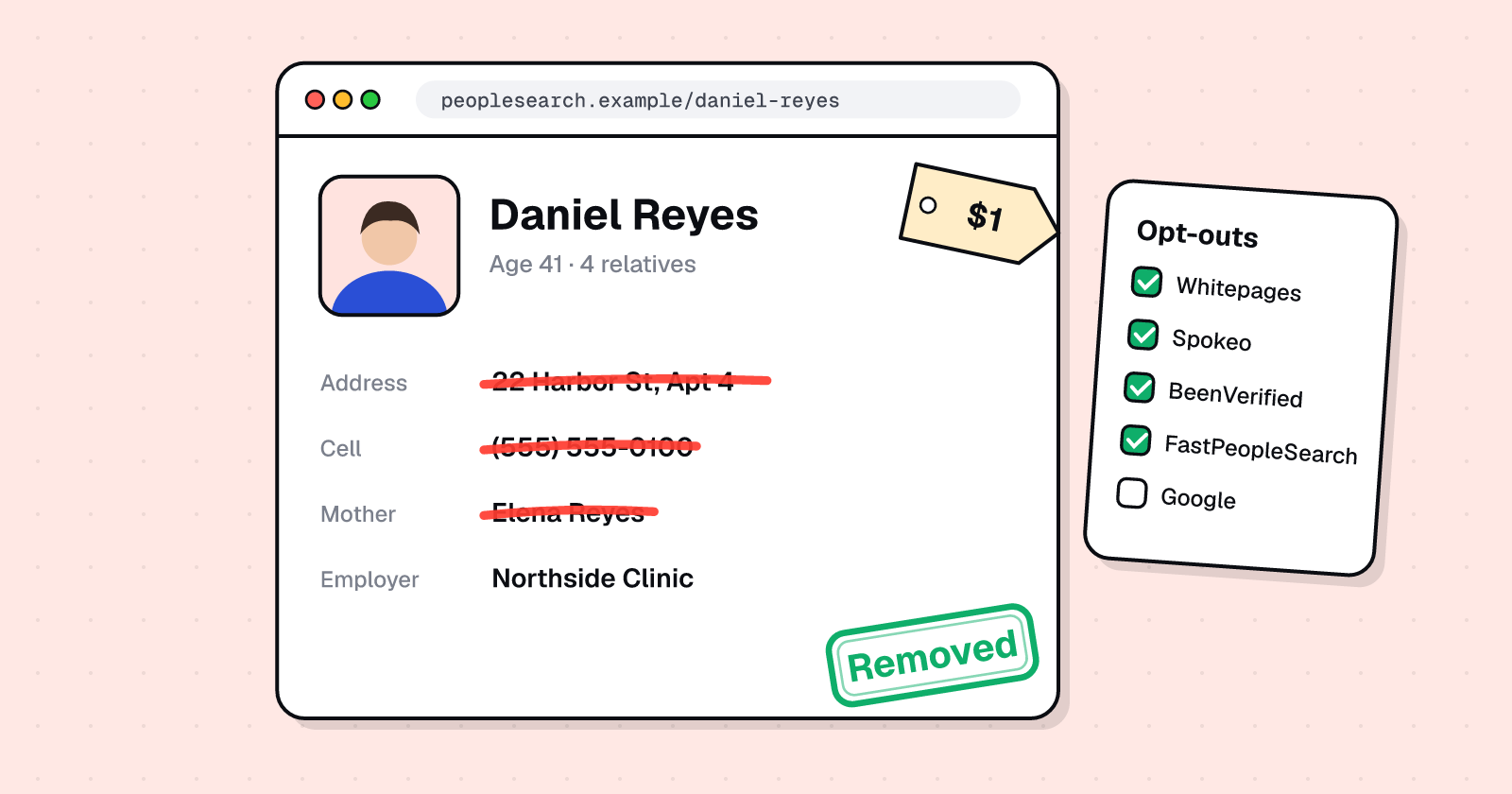
People-search sites collect your name, address, phone number, and relatives from public records and sell access to that information. Type a name into Whitepages, Spokeo, or TruePeopleSearch, and anyone can see where you live.
That part, you can erase. Every major people-search site has a free opt-out form. You have to find each listing, submit the URL, and confirm the request from your email. Then check again in a few months, because listings come back.
Start with a free scan at undoleak.com to see which sites list your home address right now.
Our complete guide to removing your personal information from the internet walks through every major site. TruePeopleSearch removal, BeenVerified opt-out, and our 30-day plan break it down step by step.
Related reading
- Flock Cameras: What They Record and Who Can Search It - Detailed guide to Flock camera data retention, misuse cases, and DRN's private license plate database
- How to Remove Your Address From Google - Use Google's Results about you tool to request removal of your home address from search results
- Why Data Brokers Re-List You After Opt-Out - Why your information comes back and what to do about it
- Is Your Car Tracking You for Insurance? The OnStar Case - GM's OnStar Smart Driver shared trip data with LexisNexis, who sold it to insurers
Quick recap
- Flock ALPR cameras scan over 20 billion license plates per month across more than 5,000 law enforcement agencies, as reported by NBC News.
- Cameras capture plate numbers, make, model, color, location, time, direction, and identifying features like dents and bumper stickers.
- More than 75% of agencies opt into a live national database that shares data without warrants, according to what Flock told Sen. Ron Wyden's office as reported by NBC.
- Deflock.org is a community map where you can check for reported ALPR camera locations near you.
- No consumer opt-out exists for driving on public roads monitored by ALPR cameras.
- Erase the link to your home by opting out of people-search sites that list your name and address.
Sources
Accessed November 5, 2026.
- Kevin Collier, NBC News, "Police cameras track billions of license plates per month. Communities are pushing back." (Nov 1, 2025), https://www.nbcnews.com/tech/tech-news/police-cameras-track-billions-license-plates-month-communities-pushing-rcna178849
- Deflock.org, https://deflock.org/
- Deflock.me, https://deflock.me/
- ACLU, "How to Fight Deployment of Flock Safety and Similar Automated License Plate Readers" (2025), https://www.aclu.org/documents/how-fight-deployment-flock-safety-and-similar-automated-license-plate-readers
- Institute for Justice, Senate testimony on Flock "Vehicle Fingerprint" (Sept 23, 2026)
Disclaimer: General information, not legal advice. UndoLeak is not affiliated with Flock Safety, Deflock, the ACLU, NBC News, the Institute for Justice or any police agency.
Frequently asked questions
What are Flock Safety license plate cameras?
Flock Safety license plate cameras are automated license plate readers (ALPRs) that scan passing vehicles. According to NBC News reporting from November 2025, Flock contracts with more than 5,000 law enforcement agencies and scans over 20 billion license plates per month. The cameras capture license plate numbers, locations, directions, times, and vehicle characteristics.
Are license plate readers tracking me?
Automated license plate readers capture still images of passing vehicles, including the plate number, location, time, direction of travel, make, model, color, and identifying features like dents or bumper stickers. More than 75% of agencies that use Flock opt into a live national database that shares this data across jurisdictions, according to what Flock told Sen. Ron Wyden's office as reported by NBC News.
How to find ALPR cameras near me?
Deflock.org (also available at Deflock.me) is an open-source, community-maintained map of ALPR camera locations. Open Deflock.org, search your street or city, and see reported cameras near where you drive. Note that there is no consumer opt-out for driving on public roads.
What is Deflock.org?
Deflock.org is a crowdsourced map of ALPR camera locations. The ACLU's 2025 guide "How to Fight Deployment of Flock Safety and Similar Automated License Plate Readers" lists Deflock.org as a resource for finding reported camera locations. It's maintained by the community and shows reported locations, not an official inventory.
Do police need a warrant to access Flock data?
According to what Flock told Sen. Ron Wyden's office as reported by NBC News, more than 75% of agencies that use Flock opt into the live national database, which allows participating agencies to view plate numbers, locations, directions and times without warrants. This statement represents what Flock told the Senator's office and is not a court holding.
What is Vehicle Fingerprint?
Vehicle Fingerprint is Flock's term for the identifying features captured by ALPR cameras beyond just the license plate, such as make, model, color, dents, roof racks, and bumper stickers. This was discussed in Institute for Justice Senate testimony on September 23, 2026.
Can I opt out of ALPR tracking on public roads?
No. There is no consumer opt-out for driving on public roads that are monitored by ALPR cameras. However, you can check where cameras are located using Deflock.org, and you can remove your name and home address from people-search sites that make it easy to connect your identity to your location.
What can I do about ALPR cameras in my area?
Check Deflock.org to see reported camera locations near you. For local policy, contact your city council or police department about ALPR deployment and data retention policies. The ACLU provides resources on how to fight deployment of Flock Safety and similar automated license plate readers in your community.
undoleak Team