Is Alexa Always Listening? What It Records and Keeps
Amazon says Alexa listens for its wake word on the device. Recordings and transcripts are saved by default. Four settings fix most of it.

Key takeaways
- Amazon says an Echo listens on the device for its wake word and doesn't store or send audio until it detects it, then the request goes to Amazon's cloud.
- A Northeastern University and Imperial College London study found smart speakers woke up by mistake between 1.5 and 19 times per day on average, depending on the device.
- As of March 28, 2025, Amazon ended the local processing option. All Alexa requests now go to Amazon's cloud.
- According to Amazon, all voice recordings and transcripts are saved by default. You can change that to "Don't save" in the Alexa app.
Not in the sense of recording everything.
Amazon says an Echo listens on the device for its wake word and doesn't store or send audio until it detects it. Then the request (plus a fraction of a second before the wake word) goes to Amazon's cloud, where recordings and transcripts are saved by default.
But speakers do wake up by mistake. Researchers measured 1.5 to 19 accidental activations per day on average, depending on the device. So change four settings: Don't save, turn off Use of voice recordings, delete your history, and use the mic button.
Last updated: November 4, 2026
Is Alexa always listening?
Yes and no.
Amazon's Alexa privacy FAQ (document GVP69FUJ48X9DK8V, accessed November 4, 2026) says that by default, Alexa devices detect only the wake word. According to Amazon:
"No audio is stored or sent to the cloud unless the device detects the wake word (or Alexa is activated by pressing a button)."
When an Echo detects the wake word, a light ring turns blue to indicate recording is active. The device then streams audio to Amazon's cloud, including what Amazon describes as "a fraction of a second of audio before the wake word."
You can enable an optional audible tone that plays when recording starts.
According to Amazon, when you join Alexa+ (the subscription service), Follow Up Mode is turned on automatically, which keeps the microphone active for a few seconds after a response so you can ask follow-up questions without repeating the wake word.
Does Alexa record your conversations?
Amazon says it records only the audio that starts when the wake word is detected (or when you press the Alexa button), plus a brief fraction of a second before the word.
Each recording becomes two things:
- The audio file
- A written transcript
Amazon's Alexa Privacy hub states: "All of your voice recordings and transcripts are saved by default, but you can change how long they are saved or choose to delete them at any time."
The available options are:
- Save until deleted (default)
- Save for 18 months
- Save for 3 months
- Don't save
When you choose "Don't save," Amazon says it deletes saved voice recordings and stops saving new ones. Transcripts and typed requests are kept until the chat has been inactive for 30 days, then deleted. Voice ID stops working, and the setting may take up to 36 hours to apply.
How often does Alexa wake up by mistake?
More often than you might think.
Researchers at Northeastern University's Mon(IoT)r Lab and Imperial College London played 125 hours of Netflix TV shows to four types of smart speakers: Echo Dot (2nd and 3rd generation), Google Home Mini, Apple HomePod, and Microsoft Invoke.
The result: speakers woke up by mistake between 1.5 and 19 times per device per day on average, depending on which device.
Most of these accidental recordings were short. But for several devices, 10% of misactivations lasted 10 seconds or more.
The researchers found no evidence of constant recording. The study, published in Proceedings on Privacy Enhancing Technologies (PETS) 2020, concluded that devices listened for the wake word but did not record continuously.
According to Northeastern Global News (July 14, 2020), the researchers identified certain words and phrases in TV dialogue that commonly triggered false activations. CBS Boston also reported on the findings.
The study does not test current devices or software versions. It's a snapshot of specific smart speaker models tested in 2020.
Can you stop Echo from sending recordings to Amazon?
Not anymore.
On March 28, 2025, Amazon ended the "Do Not Send Voice Recordings" option, which allowed certain Echo devices (Echo Dot 4th Gen, Echo Show 10, and Echo Show 15) to process some requests locally on the device without sending them to Amazon's cloud.
According to the Associated Press and The Register (reporting in March 2025), all Alexa requests now go to Amazon's cloud. Users who had enabled local processing were automatically moved to the "Don't save recordings" setting.
With "Don't save" enabled, Amazon says voice requests are processed in the cloud and then deleted, but they are no longer processed locally.
What does Amazon keep after you delete a recording?
Even after deletion, Amazon may retain other records.
Amazon Help (document G68KUKTXN92WY3C3, accessed November 4, 2026) states:
"We may still retain other records of your Alexa interactions, including records of actions Alexa took in response to your request and information about products you may have searched for or asked about."
Amazon also says:
- Data held by skill developers is not deleted when you delete your Alexa recordings
- Amazon may "continue to retain and use the systems trained on your data after your data has been deleted"
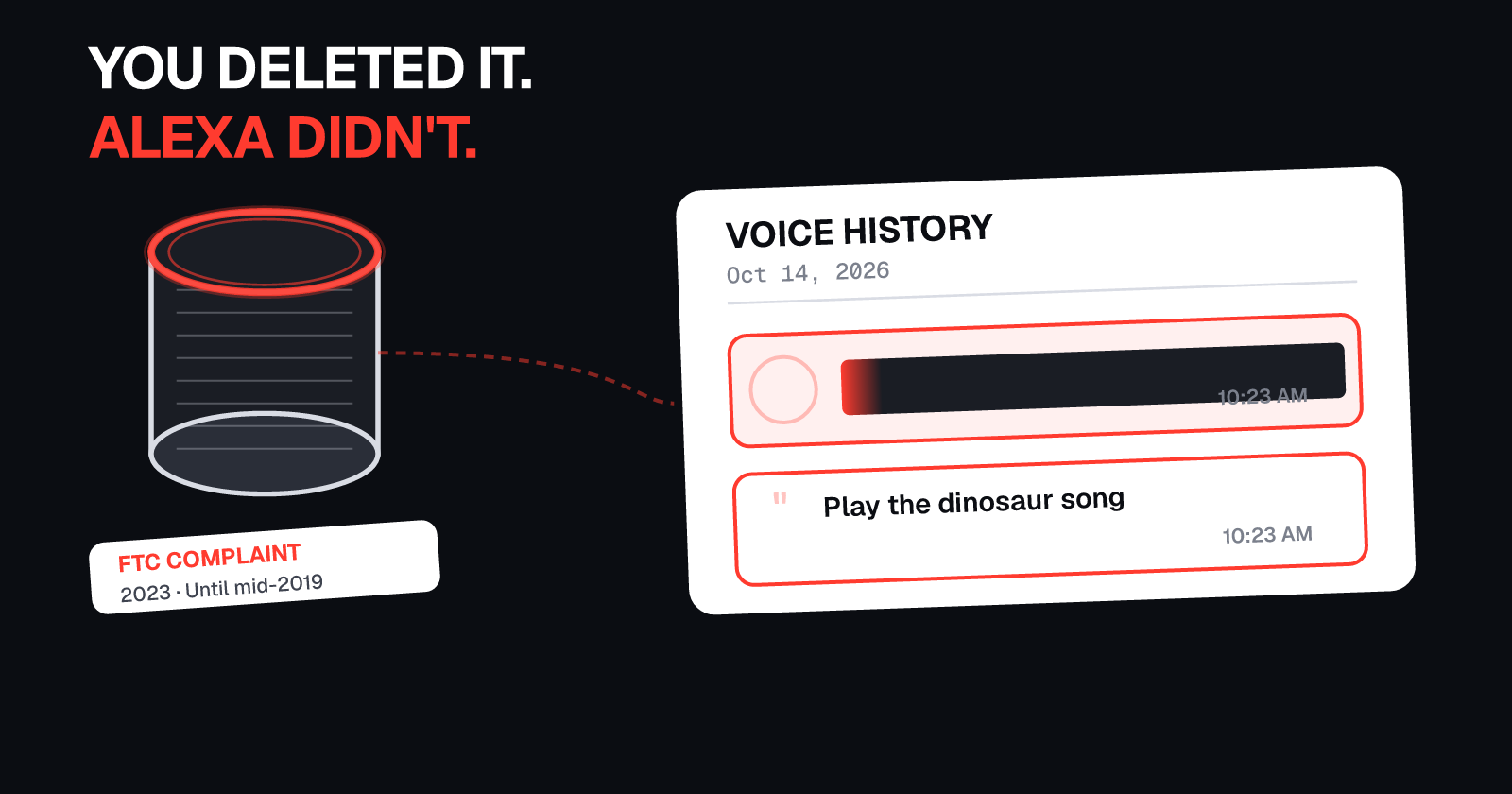
According to the FTC's May 31, 2023 complaint against Amazon (Case No. 2:23-cv-00811, paragraph 28), until mid-2019, when users or parents deleted Alexa voice recordings, Amazon in many instances deleted the audio but kept written transcripts in "residual data stores" and used those transcripts for product improvement.
The complaint states that when a user selected "delete recording," the play button and text disappeared, making it appear that both the audio and transcript were deleted. But the transcripts remained.
Amazon settled the case in 2023. In a statement on aboutamazon.com, Amazon said:
"While we disagree with the FTC's claims and deny violating the law, this settlement puts the matter behind us."
The stipulated order was entered on July 19, 2023 by the U.S. District Court for the Western District of Washington.
Can Amazon employees hear Alexa recordings?
According to a Bloomberg report from April 10, 2019, Amazon employs thousands of people around the world to listen to, transcribe, and annotate Alexa voice clips in order to improve Alexa's speech recognition and natural language processing.
Amazon's FAQ (document GVP69FUJ48X9DK8V) states that humans review "an extremely small sample" of voice recordings.
The Guardian reported in August 2019 that Amazon allows users to opt out of having their recordings included in this human review process by turning off the "Use of voice recordings" setting.
What did the FTC say Amazon did with deleted recordings?
The FTC and Department of Justice filed a complaint on May 31, 2023, alleging violations of the Children's Online Privacy Protection Act (COPPA).
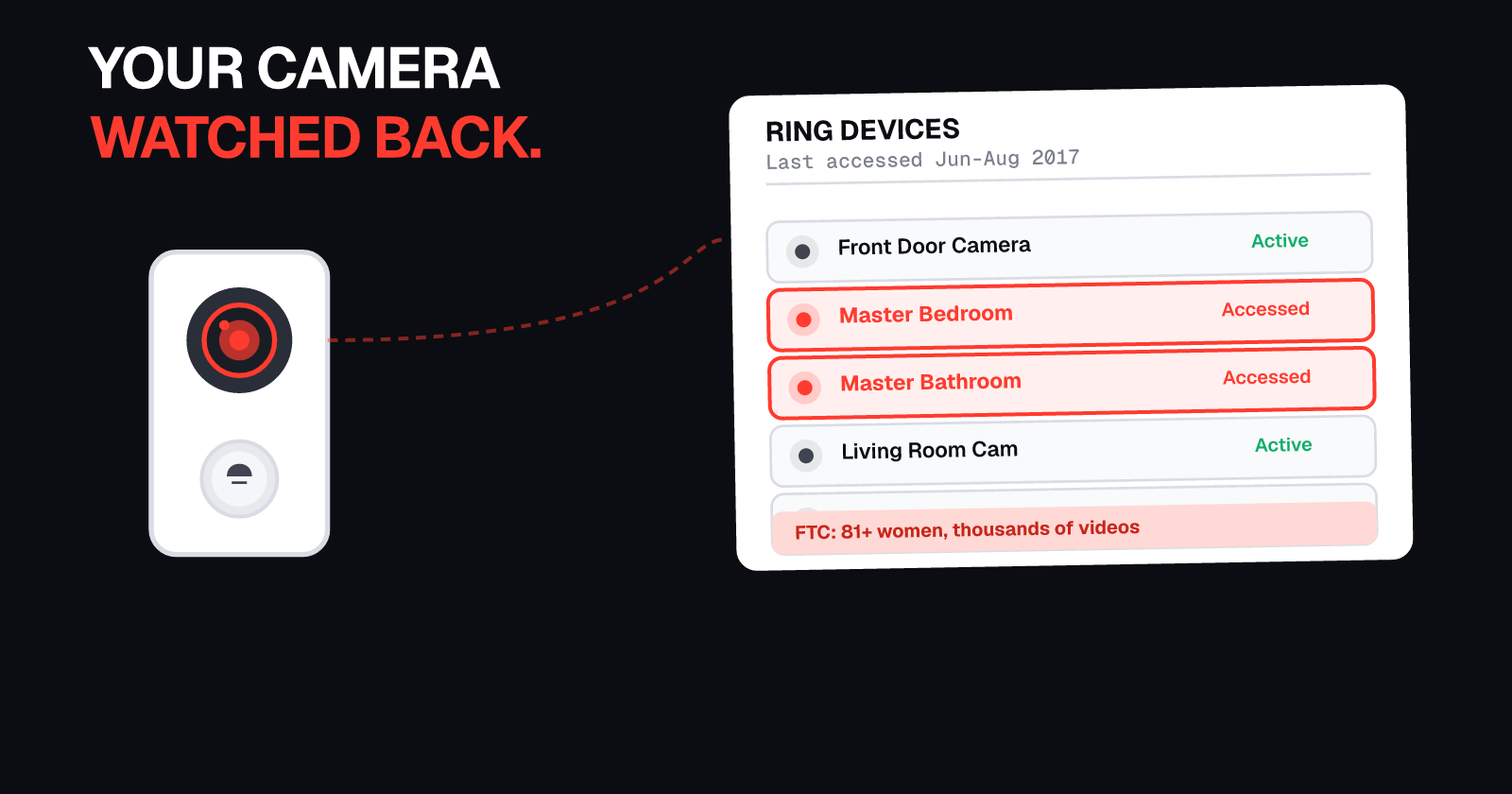
Paragraph 29 of the complaint alleged that between August 2018 and September 2019, Alexa voice recordings were accessible to 30,000 Amazon employees, approximately 15,000 of whom lacked any business need for such access.
Paragraph 28 alleged that until mid-2019, when users or parents requested deletion of Alexa voice recordings, Amazon in many instances deleted the audio but kept the written transcripts in "residual data stores."
The FTC press release (May 31, 2023) stated: "even when a parent sought to delete that information, the FTC said, Amazon failed to delete transcripts of what kids said from all its databases."
On July 19, 2023, the U.S. Department of Justice announced that a stipulated order was entered. Amazon agreed to a permanent injunction and a civil penalty, and is required to delete inactive child profiles and honor deletion requests.
Amazon's statement (published on aboutamazon.com) says:
"We disagree with the FTC's claims and deny violating the law."
The complaint describes Amazon's practices as they existed until mid-2019, not current practices.
How do I stop Alexa from saving my voice?
Here are the four settings that address most privacy concerns with Alexa voice recordings. Menu names can differ by app version and region.
1. Turn on "Don't save"
This is the most important setting. It deletes your saved recordings and stops saving new ones.
- Open the Alexa app on your phone
- Tap More (usually three horizontal lines at the bottom)
- Tap Alexa Privacy
- Tap Manage Your Alexa Data
- Under Voice Recordings (and Transcripts), choose "Don't save"
- Tap Confirm
According to Amazon Help (document G68KUKTXN92WY3C3):
- Amazon deletes your saved voice recordings
- Future voice recordings will not be saved
- Transcripts and typed requests are kept until the chat has been inactive for 30 days, after which they are automatically deleted
- Voice ID will be deleted and will no longer work
- The setting may take up to 36 hours to take effect
2. Turn off human review
This opts your recordings out of being heard by Amazon employees or contractors.
On the same screen (Manage Your Alexa Data), scroll to Help improve Alexa, then:
- Turn off "Use of voice recordings"
- Turn off "Use messages to improve transcriptions" (if present)
According to The Guardian (August 5, 2019) and Amazon's FAQ, recordings from users who turn off this setting are excluded from the supervised learning review workflow.
3. Delete what's already saved
Go back to Alexa Privacy, then:
- Tap Review Voice History
- Choose a date range (today, yesterday, this week, this month, all time), or filter by device or type
- Tap Delete for individual recordings, or Delete All Recordings for the selected period
You can also enable deletion by voice. This setting is opt-in and, according to Amazon Help (document GYRPHMGANH7M2BNH), does not work with Alexa+ or on Amazon Kids devices.
Once enabled, you can say:
- "Alexa, delete what I just said"
- "Alexa, delete everything I said today"
4. Use the microphone button
Every Echo device has a physical microphone button. Press it and the light turns red.
Amazon says that when the red light is on, the power to the microphones is disconnected and Alexa cannot hear you.
This is the only setting that stops audio from being captured at all, but it also means Alexa won't respond to the wake word until you press the button again.
Can people find my home address without Alexa?
Yes, and they don't need Alexa to do it.
Your voice history sits with one company. But your name, home address, and phone number sit with companies you've never heard of: data brokers and people-search sites.
According to the Federal Trade Commission's consumer guidance on people-search sites (accessed November 4, 2026):
"People-search sites collect and sell your information, including your address and phone number."
Type a name into one of these sites, and many will show where that person lives, their phone number, and their relatives' names.
These listings come from:
- Public records (property deeds, voter registrations, court filings)
- Marketing databases
- Data bought and resold by other data brokers
The only way to remove them is to opt out of each site individually. And even after you do, listings often come back, because the sites re-scrape or re-buy the data.
See which people-search sites list your home address (free scan)
Erase the part Alexa doesn't control
You can turn off Alexa's recordings in four steps. But the data that's already out there, on people-search sites and data brokers, requires a different approach.
You can opt out site by site. Or you can check and re-check, because listings come back.
UndoLeak erases your data from data brokers and keeps it off.
Related guides:
- How to Delete Alexa Recordings (and What Amazon Kept After You Did)
- Is Your Phone Listening to You? What Researchers and the FTC Found
- Is Your Smart TV Spying on You?
- Can Ring Employees See My Videos?
- How to Remove Yourself from the Internet
- Why Data Brokers Re-List You After Opt-Out
- What Data Brokers Know About You
Sources (accessed November 4, 2026):
- Amazon, "Alexa, Echo Devices and Your Privacy" (FAQ, document GVP69FUJ48X9DK8V): amazon.com/gp/help/customer/display.html?nodeId=GVP69FUJ48X9DK8V
- Amazon, Alexa Privacy hub: amazon.com/b?ie=UTF8&node=23608614011
- Amazon Help, "Delete Alexa Voice Recordings and Transcripts Automatically" (document G68KUKTXN92WY3C3): amazon.com/gp/help/customer/display.html?nodeId=G68KUKTXN92WY3C3
- Amazon Help, "Delete Voice Recordings by Voice" (document GYRPHMGANH7M2BNH): amazon.com/gp/help/customer/display.html?nodeId=GYRPHMGANH7M2BNH
- Northeastern University Mon(IoT)r Lab, "Privacy Analysis of Smart Speakers" (PETS 2020): moniotrlab.khoury.northeastern.edu/publications/smart-speakers-study-pets20/
- Northeastern Global News, "Are Alexa, Siri, and Cortana recording your private conversations?" (July 14, 2020): news.northeastern.edu/2020/07/14/are-alexa-siri-and-cortana-recording-your-private-conversations/
- CBS Boston, "Smart speakers record when they shouldn't, study finds" (July 15, 2020): cbsnews.com/boston/news/smart-speakers-record-alexa-apple-google-northeastern-study/
- Associated Press, "Amazon ends Echo 'Do Not Send Voice Recordings' option" (March 2025): apnews.com/article/amazon-privacy-echo-7fb3c19fa7f664bde5c5be259f8b23ee
- The Register, Sharon Harding, "Amazon kills off on-device Alexa processing for Echo owners" (March 17, 2025): theregister.com/software/2025/03/17/amazon-kills-off-on-device-alexa-processing-for-echo-owners/1214755
- Bloomberg, Matt Day and Giles Turner, "Is Anyone Listening to You on Alexa? A Global Team Reviews Audio" (April 10, 2019): bloomberg.com/news/articles/2019-04-10/is-anyone-listening-to-you-on-alexa-a-global-team-reviews-audio
- The Guardian, Alex Hern, "Alexa allows users to disable human review of voice recordings" (August 5, 2019): theguardian.com/technology/2019/aug/05/alexa-allows-users-to-disable-human-review-of-voice-recordings
- Federal Trade Commission and U.S. Department of Justice, Complaint, United States v. Amazon.com, Inc., Case No. 2:23-cv-00811 (W.D. Wash., filed May 31, 2023): ftc.gov/system/files/ftc_gov/pdf/Amazon-Complaint-(Dkt.1).pdf
- Federal Trade Commission, "FTC and DOJ Charge Amazon with Violating Children's Privacy Law by Keeping Kids' Alexa Voice Recordings Forever and Undermining Parents' Deletion Requests" (May 31, 2023): ftc.gov/news-events/news/press-releases/2023/05/ftc-doj-charge-amazon-violating-childrens-privacy-law-keeping-kids-alexa-voice-recordings-forever
- U.S. Department of Justice, "Amazon Stipulated Order and Injunctive Relief for Alleged Violations of Children's Privacy Law" (July 19, 2023): justice.gov/archives/opa/pr/amazon-agrees-injunctive-relief-and-25-million-civil-penalty-alleged-violations-childrens
- Amazon, "Amazon's response to our recent settlement with the U.S. Department of Justice regarding Alexa" (2023): aboutamazon.com/news/policy-news-views/amazon-response-to-ftc-settlement-regarding-alexa
- Federal Trade Commission, "What to know about people-search sites that sell your information": consumer.ftc.gov/articles/what-know-about-people-search-sites-sell-your-information
UndoLeak is not affiliated with Amazon or any outlet named. General information, not legal advice.
Frequently asked questions
Is Alexa always listening?
Amazon says an Echo listens on the device for its wake word and doesn't store or send audio to the cloud until it detects it. But researchers found smart speakers woke up by mistake 1.5 to 19 times per day on average, and since March 28, 2025, every Echo request goes to Amazon's cloud.
Does Alexa record your conversations?
Amazon says an Echo sends a recording to the cloud only after it detects the wake word, plus a fraction of a second of audio before the wake word. Recordings and transcripts are saved by default until you delete them or change the setting to "Don't save."
How often does Alexa wake up by mistake?
Researchers at Northeastern University and Imperial College London played 125 hours of TV to smart speakers and measured 1.5 to 19 accidental activations per device per day on average. For several devices, 10% of misactivations lasted 10 seconds or more.
Can you stop Echo from sending recordings to Amazon?
As of March 28, 2025, Amazon discontinued the "Do Not Send Voice Recordings" option. All Alexa requests now go to Amazon's cloud. You can set recordings to "Don't save" so they're deleted after processing.
What does Amazon keep after you delete a recording?
Amazon says after deletion it may still keep other records of your Alexa interactions, such as actions Alexa took and products you searched for. According to the FTC's 2023 complaint, until mid-2019 Amazon in many instances deleted the audio but kept transcripts.
Can Amazon employees hear Alexa recordings?
Bloomberg reported in 2019 that Amazon employs thousands of people around the world to listen to and transcribe Alexa clips. Amazon says humans review "an extremely small sample." You can turn off "Use of voice recordings" to opt out of human review.
How do I stop Alexa from saving my voice?
In the Alexa app, tap More, Alexa Privacy, Manage Your Alexa Data, Voice Recordings, choose "Don't save," then Confirm. Amazon says this deletes saved voice recordings and stops saving new ones. Transcripts are kept until the chat has been inactive for 30 days, then deleted.
Can people find my home address without Alexa?
Yes. People-search sites and data brokers collect and sell your name, home address, and phone number. The FTC says these sites collect your information and make it searchable online. You can opt out site by site, but listings often come back.
undoleak Team