Is My Period App Sharing My Data?
Per the FTC, Flo Health shared health data with Facebook and Google as app events. Learn how to check your period app's privacy labels and protect your data.

Key takeaways
- Per the FTC, Flo Health promised users their health data stayed private, but shared it with Facebook's and Google's analytics divisions as app events.
- The FTC said Flo shared sensitive health information, including the fact that a user was pregnant, with third parties. Flo stopped after a news article in 2019.
- In 2025, a jury found Meta violated California's wiretap law by collecting data from Flo. Meta disputes the verdict.
- Check your iPhone's App Store privacy label under 'Data Used to Track You' or Android's Google Play 'Data safety' section to see what your period app shares.
Last updated: October 23, 2026. Based on FTC press releases from January and June 2021, court records from Frasco v. Flo Health, and Ars Technica reporting from August 2025.
Maya logs her period in an app. She marks symptoms, tracks her cycle, and notes when she thinks she's pregnant. What she doesn't know: per the FTC, the app she's using sent that data to Facebook and Google.
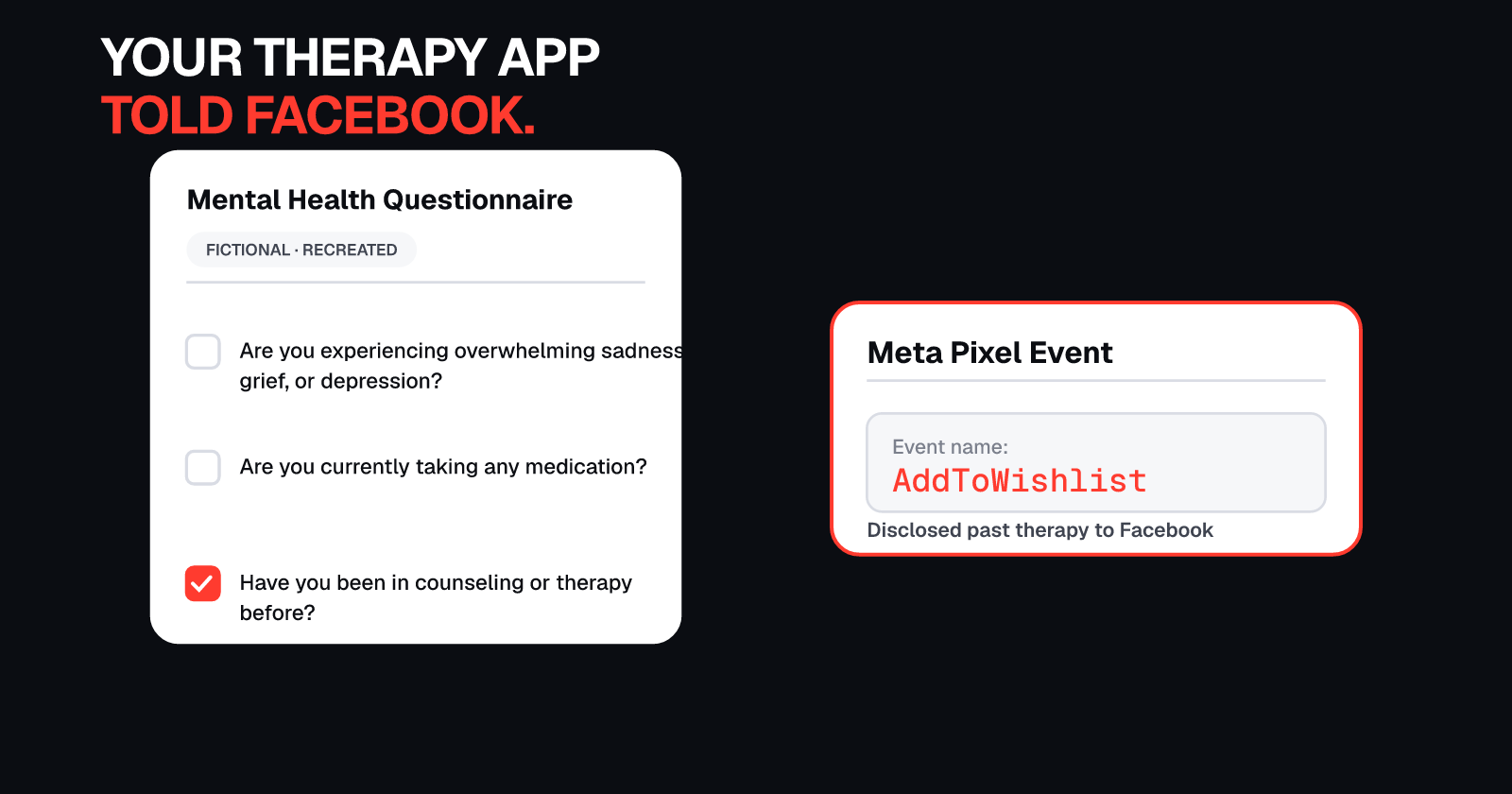
In January 2021, the FTC announced that Flo Health, a period and fertility tracking app used by more than 100 million people, shared health data from millions of users with Facebook's and Google's analytics divisions as app events. The FTC said Flo promised users their health data stayed private, but Flo shared sensitive information, including the fact that a user was pregnant, with third parties. Flo stopped sharing after a news article in February 2019.
In 2025, a jury found Meta violated California's wiretap law by collecting data from Flo. Meta disputes the verdict.
If you're wondering whether your period app is sharing your data, this guide explains what happened with Flo, what the jury decided, and how to check your own app's privacy labels.
Watch: Is your period app sharing your data?
This video walks through what the FTC said about Flo and how to check your app's privacy label.
What the FTC said Flo did
Per the FTC's January 13, 2021 press release, "Developer of Popular Women's Fertility-Tracking App Settles FTC Allegations that It Misled Consumers About the Disclosure of their Health Data":
Flo promised privacy. The FTC alleged that Flo promised to keep users' health data private and only use it to provide the app's services.
Flo shared with Facebook and Google. The FTC said Flo shared health data from millions of users to third parties that provided marketing and analytics services to the app, including Facebook's analytics division, Google's analytics division, Google's Fabric service, AppsFlyer, and Flurry.
Pregnancy data was shared. Per the FTC, Flo shared sensitive health information, such as the fact of a user's pregnancy, to third parties in the form of "app events."
It stopped after a news article. The FTC said Flo did not stop sharing this sensitive data until its practices were revealed in a news article in February 2019.
The FTC finalized its order with Flo in June 2021. The order requires Flo to obtain affirmative consent before sharing health information with others, notify affected users, instruct third parties to destroy the data previously shared, and obtain an independent privacy review. The order prohibits Flo from misrepresenting how it collects, uses, or shares health information.
What are app events?
App events are data that apps send to analytics services to track user behavior. Per the plaintiffs' trial brief, as quoted by Ars Technica (August 2025), Flo sent these events "via Custom App Events (CAEs) sent through their respective Software Development Kits (SDKs), incorporated in the Flo App."
An SDK is a software development kit, a piece of code that app developers embed in their apps. When you use the app, the SDK can collect data and send it to a third party, even if you never heard of that third party.
What the jury found about Meta
On September 17, 2025, Judge Donato of the U.S. District Court for the Northern District of California issued an order in Frasco v. Flo Health, No. 21-cv-00757-JD. The order states:
"the jury returned a unanimous verdict finding Meta had violated CIPA by eavesdropping on or recording plaintiffs' communications with the Flo App without their consent"
CIPA is California's Invasion of Privacy Act, California's wiretap law.
The jury verdict form asked: "Did plaintiffs prove ... that Meta intentionally eavesdropped on and/or recorded their conversation by using an electronic device?" The jury answered yes.
Judge Donato denied Meta's post-trial motions, including for a new trial.
Meta disputes the verdict. In a statement reported by Ars Technica in August 2025, Meta said: "We vigorously disagree with this outcome."
How to check if your period app is tracking you
You can check what your period app shares by reading its privacy label on the App Store (iPhone) or Google Play (Android). Privacy labels are self-reported by developers. Apple states it has not verified this information.
On iPhone (App Store)
Open the App Store and search for your period app.
Scroll down to App Privacy. This section shows what data the app collects.
Check "Data Used to Track You." This section shows data from the app that is linked with data collected from other companies' apps, websites, or offline properties, and used for ads or shared with a data broker. Per Apple Support, "Data used to track you refers to data from the app that is linked with your data collected from other companies' apps, websites, or offline properties, and used for ads or shared with a data broker."
Check what types of data are listed. If you see Health & Fitness data under "Data Used to Track You," that means the app links your health data to tracking across other apps or websites.
Read the note at the bottom. App Store pages state "This information has not been verified by Apple."
On Android (Google Play)
Open Google Play and search for your period app.
Scroll to "Data safety" and tap "See details."
Check "Data sharing." Per Google Play Help, "Developers describe if their app shares your data with third parties." Look for the section labeled "Data shared."
Check if Health info is shared. If the app lists Health info under "Data shared," tap it to see what health data is shared and with whom.
Check the purpose. Google Play labels show whether data is shared for advertising, analytics, or other purposes.
What to look for
No "Data Used to Track You" section (iPhone) or "No data shared with third parties" (Android) is the safest option.
If the app shares Health & Fitness data or Health info with third parties for advertising or analytics, that's a red flag.
Check whether the sharing is required or optional. Some apps let you opt out of analytics.
What these labels don't tell you
Privacy labels are self-reported by developers and are not audited by Apple or Google. They show what developers say they do, not what independent researchers have verified.
The labels also don't show:
- Whether data has been de-identified or anonymized
- Whether the app shares data with data brokers
- Whether third-party SDKs in the app collect data independently
If you want more detail, check the app's full privacy policy, usually linked from the app's store page.
Which period apps are safer?
We're not endorsing specific apps, but you can compare privacy labels yourself:
Apps with no "Data Used to Track You" section (iPhone) or "No data shared" (Android) are better for privacy.
Apps that don't require an account or that let you store data only on your device are safer than apps that upload data to the cloud.
What if I already used an app that shared my data?
If you used Flo or another period app that shared health data, you can't undo that. The data that was shared is out there. But you can limit future sharing:
Switch to a more private app. Check privacy labels and choose an app that doesn't share data with third parties.
Delete your account from the old app. Many apps let you request data deletion through their privacy settings or website. Under California law (CCPA) and similar state laws, you have the right to request deletion of your personal information.
Turn off tracking on your phone. On iPhone, go to Settings > Privacy & Security > Tracking and turn off "Allow Apps to Request to Track." On Android, go to Settings > Privacy > Ads (or Settings > Google > Ads, depending on your device) and tap "Delete advertising ID."
Check app permissions. Go to your phone's settings, find the app, and revoke any permissions you don't think it needs, like location or contacts.
What the law says (as of October 2026)
The FTC has authority to act against unfair or deceptive practices. The FTC's action against Flo was based on the allegation that Flo misled consumers by promising privacy but sharing data anyway.
Several states have passed privacy laws that give you rights over your health data:
California (CCPA and CMIA): You can request that apps delete your personal information and stop selling or sharing it. California's Confidentiality of Medical Information Act (CMIA) has stricter rules for health data.
Other states with privacy laws: Virginia, Colorado, Connecticut, Utah, and several other states passed laws between 2021 and 2026 that give you the right to access, delete, and opt out of sales of your personal information.
Health apps are also covered by the FTC's Health Breach Notification Rule, which requires apps handling personal health records to notify consumers if there's a breach.
There is no comprehensive federal privacy law covering health apps as of October 2026, but the FTC continues to enforce against deceptive practices.
The bigger picture: health apps and data brokers
Period apps are one type of health app. The same privacy concerns apply to:
- Fertility trackers
- Pregnancy apps
- Symptom checkers
- Fitness apps (when they collect health data)
- Mental health apps
If an app collects health information and shares it with third parties for advertising or analytics, it's feeding the data broker ecosystem. Once your data is shared with Facebook, Google, or a data broker, it can be combined with other data, like your browsing history, location, and purchases.
If you're working on removing your personal information from data brokers, limiting what health apps share is part of the same effort. Our main guide, how to remove your personal information from the internet, covers the full process.
A realistic routine for period app privacy
Today: Check your current period app's privacy label. If it shares Health data with third parties for tracking or advertising, look for a more private alternative.
When switching apps: Download your data from the old app if you want to keep your cycle history. Most apps have an export feature in settings.
After switching: Request deletion of your account and data from the old app. Under California law and similar state laws, you can request deletion of your personal information.
Every few months: Check your phone's app permissions and ad tracking settings. Make sure you haven't granted tracking permissions to new apps.
If you're asked to consent to data sharing: Read what you're consenting to. If the app asks to share health data for advertising, you can say no. Some apps work fine without it.
These steps take about 15 minutes the first time and a few minutes for each check-in. The goal isn't to eliminate all data collection (some apps need to sync data to work across devices), but to limit sharing with third parties for advertising and tracking.
Sources
Federal Trade Commission, "Developer of Popular Women's Fertility-Tracking App Settles FTC Allegations that It Misled Consumers About the Disclosure of their Health Data" (January 13, 2021). https://www.ftc.gov/news-events/news/press-releases/2021/01/developer-popular-womens-fertility-tracking-app-settles-ftc-allegations-it-misled-consumers-about
Federal Trade Commission, "FTC Finalizes Order with Flo Health: Fertility-Tracking App Shared Sensitive Health Data with Facebook and Google" (June 22, 2021). https://www.ftc.gov/news-events/news/press-releases/2021/06/ftc-finalizes-order-flo-health-fertility-tracking-app-shared-sensitive-health-data-facebook-google
Frasco v. Flo Health, No. 21-cv-00757-JD, Amended order re post-trial motions (N.D. Cal. Sept. 17, 2025). https://www.courtlistener.com/docket/55370837/frasco-v-flo-health-inc/
Jon Brodkin, "Meta illegally collected data from Flo period and pregnancy app, jury finds," Ars Technica (August 13, 2025). https://arstechnica.com/tech-policy/2025/08/jury-finds-meta-broke-wiretap-law-by-collecting-data-from-period-tracker-app/
Apple Support, "About privacy information on the App Store." https://support.apple.com/en-us/102399
Google Play Help, "Data safety section." https://support.google.com/googleplay/answer/11416267
UndoLeak erases your data from data brokers and keeps it off. Health app tracking is one piece. We handle the rest: people-search sites, Google results, leaked photos, and ongoing monitoring so your information stays private.
Frequently asked questions
Is my period app sharing my data?
It depends on the app. Per the FTC, Flo Health shared health data with Facebook and Google as app events until 2019. Check your app's privacy label in the App Store (iPhone) or Google Play (Android) under 'Data Used to Track You' or 'Data safety' to see what it shares with third parties.
What did Flo Health share with Facebook and Google?
Per the FTC's January 2021 press release, Flo shared health data from millions of users with Facebook's analytics division, Google's analytics division, and other services. The FTC said Flo shared sensitive health information, such as the fact of a user's pregnancy, in the form of app events. Flo stopped sharing after a news article in February 2019.
What are app events?
App events are data that apps send to analytics services like Facebook and Google to track user behavior. Per court filings, Flo sent custom app events through software development kits (SDKs) incorporated in the Flo app. These events can include actions like logging symptoms or tracking pregnancy.
Did Meta get in trouble for collecting Flo data?
In 2025, a jury in the U.S. District Court for the Northern District of California found that Meta violated California's wiretap law by eavesdropping on or recording plaintiffs' communications with the Flo app without their consent. Judge Donato denied Meta's post-trial motions, including for a new trial. Meta disputes the verdict.
Is Flo safe to use now?
Per the FTC's June 2021 final order, Flo must not misrepresent how it collects, uses, or discloses health information, and must obtain affirmative consent before sharing health information with others. The order also requires Flo to notify affected users, instruct third parties to destroy previously shared data, and obtain an independent privacy review. The order does not state that Flo currently shares data. Check Flo's current privacy label and policy for what it shares today.
How do I check if my period app is tracking me?
On iPhone, go to the App Store, search for your app, scroll down to App Privacy, and check 'Data Used to Track You.' On Android, open Google Play, search for your app, scroll to 'Data safety,' tap 'See details,' and check 'Data shared' with third parties. Labels are self-reported by developers. Apple states it has not verified this information.
What should I look for in a period app's privacy label?
Check 'Data Used to Track You' (iPhone) or 'Data shared' (Android). If the app shares Health & Fitness data with third parties for tracking or advertising, that's a red flag. Look for apps with no 'Data Used to Track You' section (iPhone) or 'No data shared with third parties' (Android).
undoleak Team