Did BetterHelp Share Your Data With Facebook? What the FTC Found
Per the FTC, BetterHelp shared emails and therapy data with Facebook for ads. Learn how email lists and pixels work, and how to disconnect.

Key takeaways
- Per the FTC, BetterHelp's sign-up questionnaire asked about depression, medication, and past therapy, then promised 'any information provided in this questionnaire will stay private between you and your counselor.'
- The FTC alleged that from 2017 to 2018, BetterHelp uploaded over 7 million email addresses to Facebook. Facebook matched over 4 million with Facebook accounts. The FTC also said BetterHelp disclosed over 1.5 million people's past therapy to Facebook via tracking pixel events coded as 'AddToWishlist' from 2018 to 2020.
- BetterHelp settled without admitting wrongdoing. In 2023, BetterHelp called the practice 'industry-standard' and said it never shared names or clinical data from therapy sessions. BetterHelp stopped the practices in 2020.
- You can disconnect future activity that businesses send to Meta from your account by going to Settings, Accounts Center, Your activity off Meta technologies, and choosing to disconnect future activity. This does not prevent email list uploads.
Last updated: October 28, 2026. Based on the FTC complaint In the Matter of BetterHelp, Inc. (2023), the FTC's July 2023 final order, and BetterHelp's 2023 statement.
Your therapy app asked if you were depressed, on medication, or had been in therapy before. It told you the answers would stay private between you and your counselor. Then, according to the FTC, it told Facebook.
In March 2023, the Federal Trade Commission announced a proposed order with BetterHelp, an online therapy platform used by millions of people. The FTC alleged that BetterHelp promised to keep health data private but shared it with Facebook, Snapchat, Criteo, and Pinterest for advertising.
BetterHelp settled without admitting wrongdoing. In a 2023 statement, BetterHelp called the practices "industry-standard" and said it stopped them in 2020.
If you're wondering what BetterHelp shared and how it happened, this guide explains what the FTC alleged, the two mechanisms used to share the data, and how to disconnect future activity that businesses send to Meta from your account.
Watch: Did BetterHelp share your data with Facebook?
This video walks through what the FTC found and how to disconnect activity businesses send to Meta.
What the FTC alleged
On March 2, 2023, the FTC announced a proposed consent order with BetterHelp. On July 14, 2023, the FTC issued its final order.
Per the FTC's complaint, In the Matter of BetterHelp, Inc., File No. 2023169:
BetterHelp promised privacy
From at least August 2017 to December 2020, when a visitor reached the question about medication during the sign-up process, BetterHelp displayed this statement:
"Rest assured—any information provided in this questionnaire will stay private between you and your counselor."
Per the FTC complaint (paragraph 24), this promise was shown while visitors answered sensitive health questions.
The sign-up questionnaire asked sensitive health questions
Per the FTC complaint (paragraph 21), the intake questionnaire asked whether visitors were:
- "experiencing overwhelming sadness, grief, or depression"
- having thoughts they "would be better off dead or hurting yourself in some way"
- "currently taking any medication"
- had previously been in therapy
BetterHelp uploaded over 7 million email addresses to Facebook
According to the FTC complaint (paragraph 52), between 2017 and 2018, BetterHelp uploaded lists of over 7 million visitors' and users' email addresses to Facebook. Facebook matched over 4 million of these with Facebook user IDs, linking their use of the service for mental health treatment with their Facebook accounts.
In October 2017, the FTC alleged (paragraph 52c), BetterHelp uploaded nearly 2 million current and former users' email addresses to target them with "refer a friend" ads.
Per the FTC complaint (paragraph 49), hashing the email addresses did not hide identities from Facebook, which matched them with user accounts.
BetterHelp disclosed past therapy to Facebook via tracking pixels
According to the FTC complaint (paragraph 53b), from November 2018 to March 2020, BetterHelp disclosed to Facebook over 1.5 million visitors' and users' previous therapy, gathered through their answers to the intake questionnaire question "Have you been in counseling or therapy before?"
Per the FTC complaint (paragraph 54), an affirmative answer to the question was coded as the tracking pixel event "AddToWishlist." A junior analyst revealed to Facebook that this event meant the "user completes questionnaire marking they have been in therapy before."
BetterHelp also shared data with Snapchat and Criteo
Per the FTC complaint (paragraph 55), BetterHelp also disclosed IP addresses and email addresses of approximately 5.6 million visitors to Snapchat in January 2019. BetterHelp also shared emails with Criteo, including visitors to Pride Counseling and Faithful Counseling, two BetterHelp-affiliated services.
BetterHelp's response
BetterHelp settled without admitting wrongdoing.
In a 2023 statement reported by Healthcare Dive on March 2, 2023, BetterHelp said data sharing for targeted advertising is an "industry-standard practice" that is "routinely used by some of the largest health providers."
BetterHelp also stated, as reported by Fierce Healthcare in 2023, that it never shared names or clinical data from therapy sessions.
Per Healthcare Dive's reporting in March 2023, BetterHelp halted the practices in 2020.
How email list uploads work
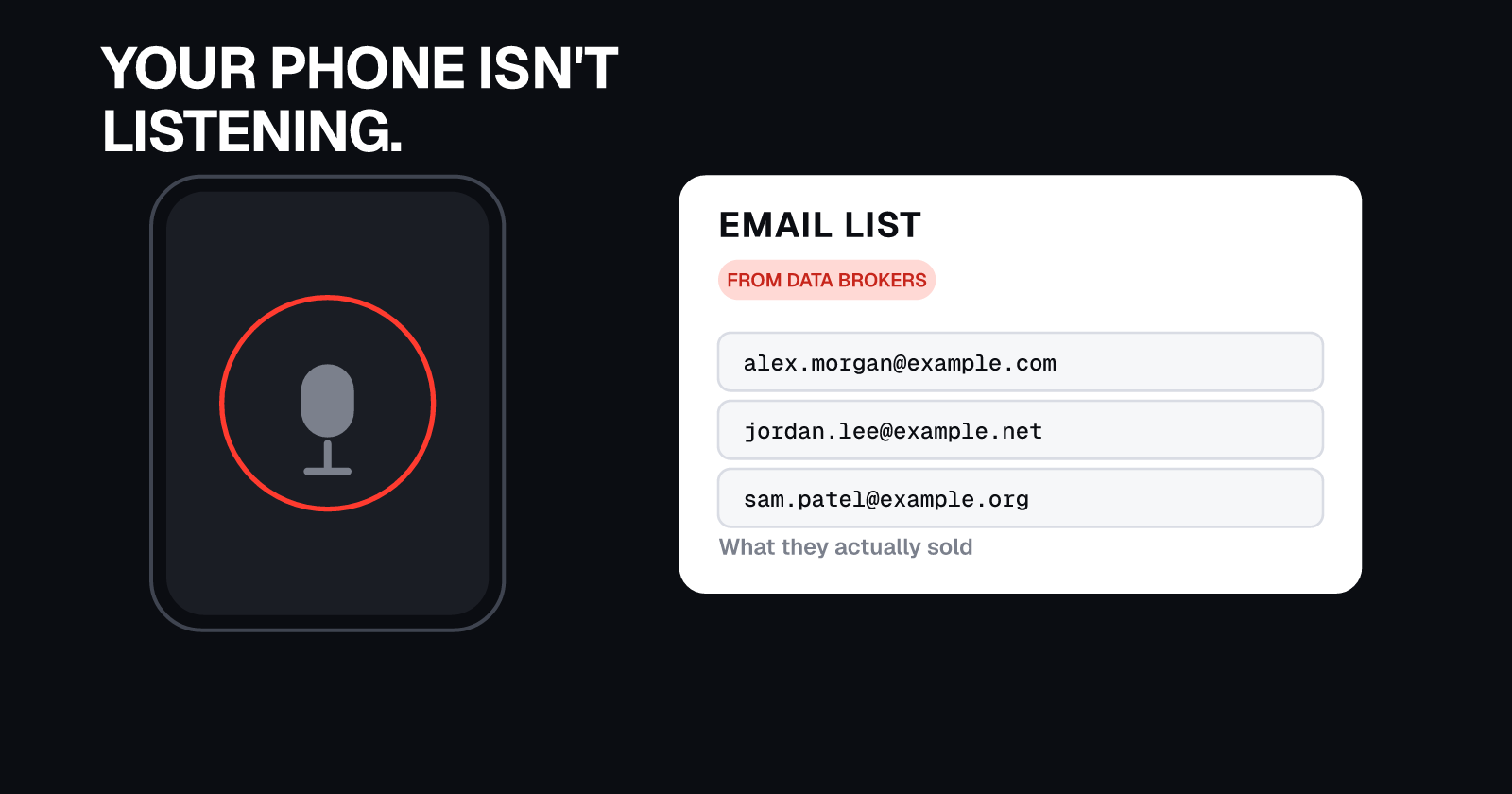
One way BetterHelp shared data with Facebook, according to the FTC, was by uploading email lists. This practice is called creating custom audiences.
Here's how it works:
A company collects emails. BetterHelp collected email addresses from people who signed up for or inquired about therapy services.
The company uploads the emails to Facebook. BetterHelp uploaded lists of over 7 million email addresses to Facebook, per the FTC.
Facebook matches the emails with user accounts. Facebook matched over 4 million of these email addresses with Facebook user IDs, per the FTC.
The company targets ads to those accounts. Once matched, BetterHelp could show ads to those Facebook users, or exclude them, or build lookalike audiences based on their characteristics.
Why an email alone revealed health information
Per the FTC complaint (paragraph 48), BetterHelp collected email addresses only from people who were seeking mental health treatment through the service. The fact that someone's email was in BetterHelp's system revealed that they had sought therapy.
As the FTC explained, even though BetterHelp did not send Facebook a name or the content of therapy sessions, the email address itself was enough to link the person's Facebook account to the fact that they were seeking mental health treatment.
How tracking pixels work
The second way BetterHelp shared data with Facebook, according to the FTC, was through tracking pixels and pixel events.
Here's how it works:
A company adds a pixel to its website. A tracking pixel is a small piece of code, often called the Meta pixel or Facebook pixel. When embedded on a website, it sends information about user activity to Facebook.
The pixel sends events. An event is a specific action, like viewing a page, clicking a button, or completing a form. The company can name these events anything, like "Purchase" or "AddToCart" or, in BetterHelp's case, "AddToWishlist."
The pixel sends identifiers. Along with the event name, the pixel sends information that can identify the user, such as IP address or email address if available.
Facebook links the event to a user account. Facebook uses the identifiers to link the event to a Facebook user account, building a profile of the user's activity on that website.
What BetterHelp's pixel sent
Per the FTC complaint (paragraph 53b), from November 2018 to March 2020, BetterHelp's tracking pixel sent Facebook an event every time someone answered "yes" to the question "Have you been in counseling or therapy before?"
The event was coded as "AddToWishlist."
Per the FTC complaint (paragraph 54), a junior analyst from BetterHelp revealed to Facebook the meaning of this event: "user completes questionnaire marking they have been in therapy before."
This disclosure allowed Facebook to connect the "AddToWishlist" event to a person's therapy history, per the FTC.
What the FTC's final order requires
On July 14, 2023, the FTC issued its final order with BetterHelp.
Per the FTC press release, the order:
- Bans sharing health data for advertising. BetterHelp is prohibited from sharing consumers' health data for advertising purposes.
- Requires consent. BetterHelp must obtain affirmative express consent before sharing health information with others.
- Requires deletion. BetterHelp must instruct third parties, including Facebook, to delete the data previously shared.
- Imposes data retention limits. BetterHelp must limit how long it retains health data.
The FTC press release is available at: https://www.ftc.gov/news-events/news/press-releases/2023/07/ftc-gives-final-approval-order-banning-betterhelp-sharing-sensitive-health-data-advertising
How to disconnect future activity on Facebook and Instagram
If you use Facebook or Instagram, you can disconnect future activity that businesses send to Meta from your account. This stops the platform from linking activity that businesses send via tools like the Meta pixel to your account.
Here's how, per the Meta Help Center:
- Go to your profile photo
- Tap Settings & privacy
- Tap Settings
- Tap Accounts Center
- Tap Your information and permissions
- Tap Your activity off Meta technologies
- Tap Manage future activity
- Tap Disconnect future activity
- Tap Continue
- Tap Disconnect future activity
Source: Meta Help Center, "Manage your future activity off Meta technologies," https://www.facebook.com/help/1224342157705160
What this does and doesn't do
What it does: This setting disconnects activity that businesses send to Meta via business tools, such as the Meta pixel, from your Facebook or Instagram account. Future pixel events from websites and apps will not be linked to your profile.
What it doesn't do: This setting does not prevent a company from uploading an email list to Meta. If a company has your email address and uploads it to create a custom audience, Meta can still match it with your account.
For sensitive sign-ups, you can use an email address that is not associated with your social media accounts to limit this type of matching.
What this means for therapy apps and mental health apps
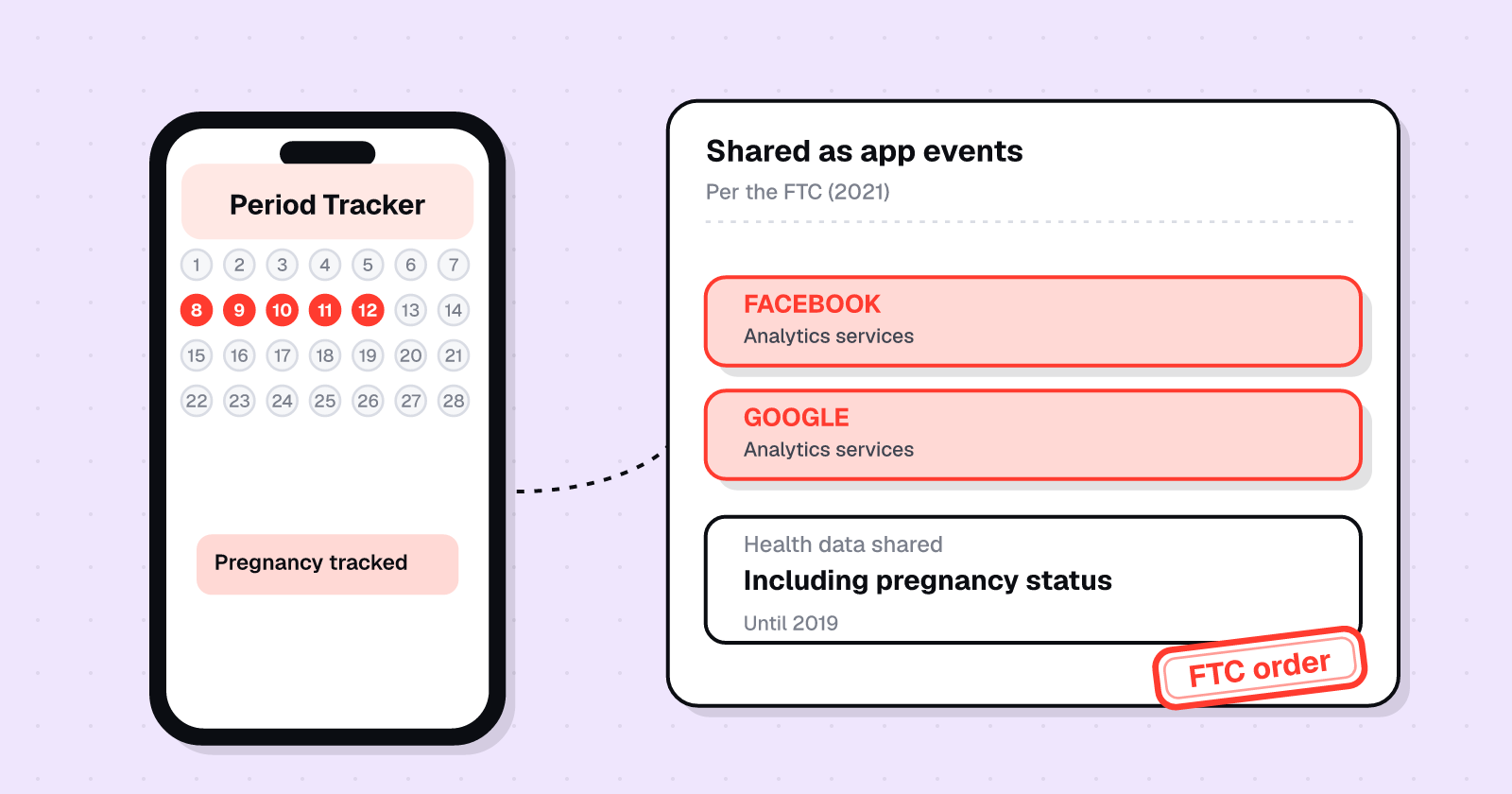
BetterHelp is one case, but the issue extends to other health apps and mental health apps. Per the FTC, period tracking apps like Flo also shared health data with Facebook and Google as app events until 2019.
If you use a therapy app, mental health app, symptom tracker, or similar service, consider:
Check the app's privacy policy. Look for how the app shares data with third parties, especially for advertising or analytics.
Check the app's privacy label. On iPhone, go to the App Store, search for the app, and scroll to App Privacy. On Android, go to Google Play, search for the app, and check the Data safety section. Look for whether Health data is shared with third parties.
Use an email address not tied to social accounts for sensitive sign-ups. This limits the ability of custom audience matching to connect your activity with your social media profile.
Disconnect future activity on Meta. Follow the steps above to stop businesses from linking activity sent via the Meta pixel to your account.
The bigger picture: health data and data brokers
Health app data sharing is part of a larger ecosystem of data collection and data brokerage. Once your data is shared with Facebook, Google, or a data broker, it can be combined with other data about you, from your browsing history to your location to your purchases.
If you're working on removing your personal information from data brokers, limiting what health apps share is part of the same effort. Our main guide, how to remove your personal information from the internet, covers the full process.
If you used BetterHelp or another therapy app that shared data, the data that was shared is already out there. But you can limit future sharing by checking privacy settings, using separate email addresses for sensitive services, and disconnecting future activity on platforms like Meta.
UndoLeak erases your data from data brokers and keeps it off. Health app tracking is one piece. We handle the rest: people-search sites, Google results, leaked photos, and ongoing monitoring so your information stays private.
Sources
Federal Trade Commission, "Complaint, In the Matter of BetterHelp, Inc." (2023), File No. 2023169: https://www.ftc.gov/system/files/ftc_gov/pdf/2023169betterhelpcomplaintfinal.pdf
Federal Trade Commission, "FTC Gives Final Approval to Order Banning BetterHelp from Sharing Sensitive Health Data for Advertising" (July 14, 2023): https://www.ftc.gov/news-events/news/press-releases/2023/07/ftc-gives-final-approval-order-banning-betterhelp-sharing-sensitive-health-data-advertising
Healthcare Dive, "FTC orders BetterHelp over alleged health data sharing" (March 2, 2023): https://www.healthcaredive.com/news/ftc-betterhelp-settlement-health-data-sharing-fine/644021/
Fierce Healthcare, "Teladoc-owned BetterHelp reaches FTC order over alleged data misuse" (March 2, 2023): https://www.fiercehealthcare.com/health-tech/teladoc-owned-betterhelp-pay-78m-users-alleged-data-misuse-ftc-order
Meta Help Center, "Manage your future activity off Meta technologies" (2026): https://www.facebook.com/help/1224342157705160
Not affiliated with BetterHelp, Meta, or any company mentioned.
Frequently asked questions
Did BetterHelp share my data with Facebook?
Per the FTC's 2023 complaint, between 2017 and 2018, BetterHelp uploaded lists of over 7 million visitors' and users' email addresses to Facebook, and Facebook matched over 4 million with Facebook user IDs. From November 2018 to March 2020, BetterHelp also sent over 1.5 million people's previous therapy information to Facebook via tracking pixel events. BetterHelp stopped these practices in 2020.
What did BetterHelp's sign-up questionnaire ask?
Per the FTC complaint (paragraph 21), the intake questionnaire asked whether visitors were 'experiencing overwhelming sadness, grief, or depression,' had thoughts they 'would be better off dead or hurting yourself in some way,' were 'currently taking any medication,' and had previously been in therapy.
What did BetterHelp promise about privacy?
Per the FTC complaint (paragraph 24), from at least August 2017 to December 2020, when a visitor reached the question about medication, BetterHelp showed the statement: 'Rest assured—any information provided in this questionnaire will stay private between you and your counselor.'
What are custom audiences?
Custom audiences are email lists that advertisers upload to platforms like Facebook. The platform matches the emails with user accounts, allowing advertisers to target those users with ads. According to the FTC, an email collected only from people seeking therapy revealed health information even without a name attached.
What are tracking pixels?
Tracking pixels are small pieces of code on websites that send information about user activity to third parties. Per the FTC complaint, BetterHelp sent events through pixels that disclosed when someone answered yes to 'Have you been in counseling or therapy before?' The event was coded as 'AddToWishlist.'
Did BetterHelp admit wrongdoing?
No. BetterHelp settled without admitting wrongdoing. In a 2023 statement, BetterHelp called data sharing for targeted advertising an 'industry-standard practice' routinely used by large health providers. BetterHelp also stated it never shared names or clinical data from therapy sessions.
What did the FTC order require?
The FTC's July 2023 final order bans BetterHelp from sharing health data for advertising, requires affirmative consent before sharing health data, requires third parties to delete previously shared data, and imposes data retention limits.
How do I disconnect future activity on Facebook and Instagram?
Go to your profile photo, Settings & privacy, Settings, Accounts Center, Your information and permissions, Your activity off Meta technologies, Manage future activity, Disconnect future activity, Continue, Disconnect future activity. This disconnects activity that businesses send via Meta business tools like the Meta pixel from your account. It does not stop a company from uploading an email list.
undoleak Team