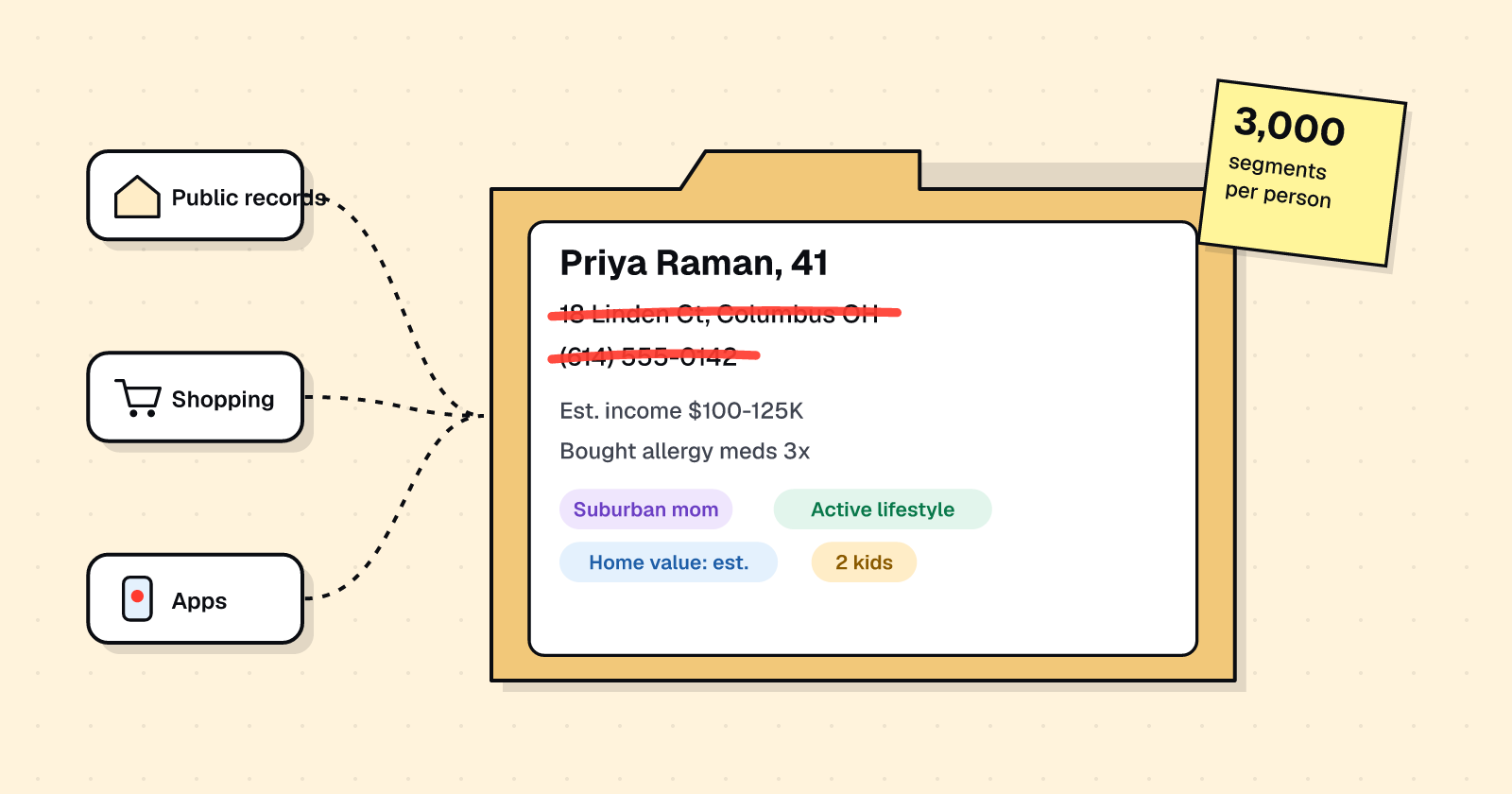
Data brokers
What Data Brokers Know About You (and Where They Get It)
What's in a data broker file: contact details, relatives, purchases, inferred traits and location. Where it comes from, and how to cut it.
AAncestry·Genealogy site
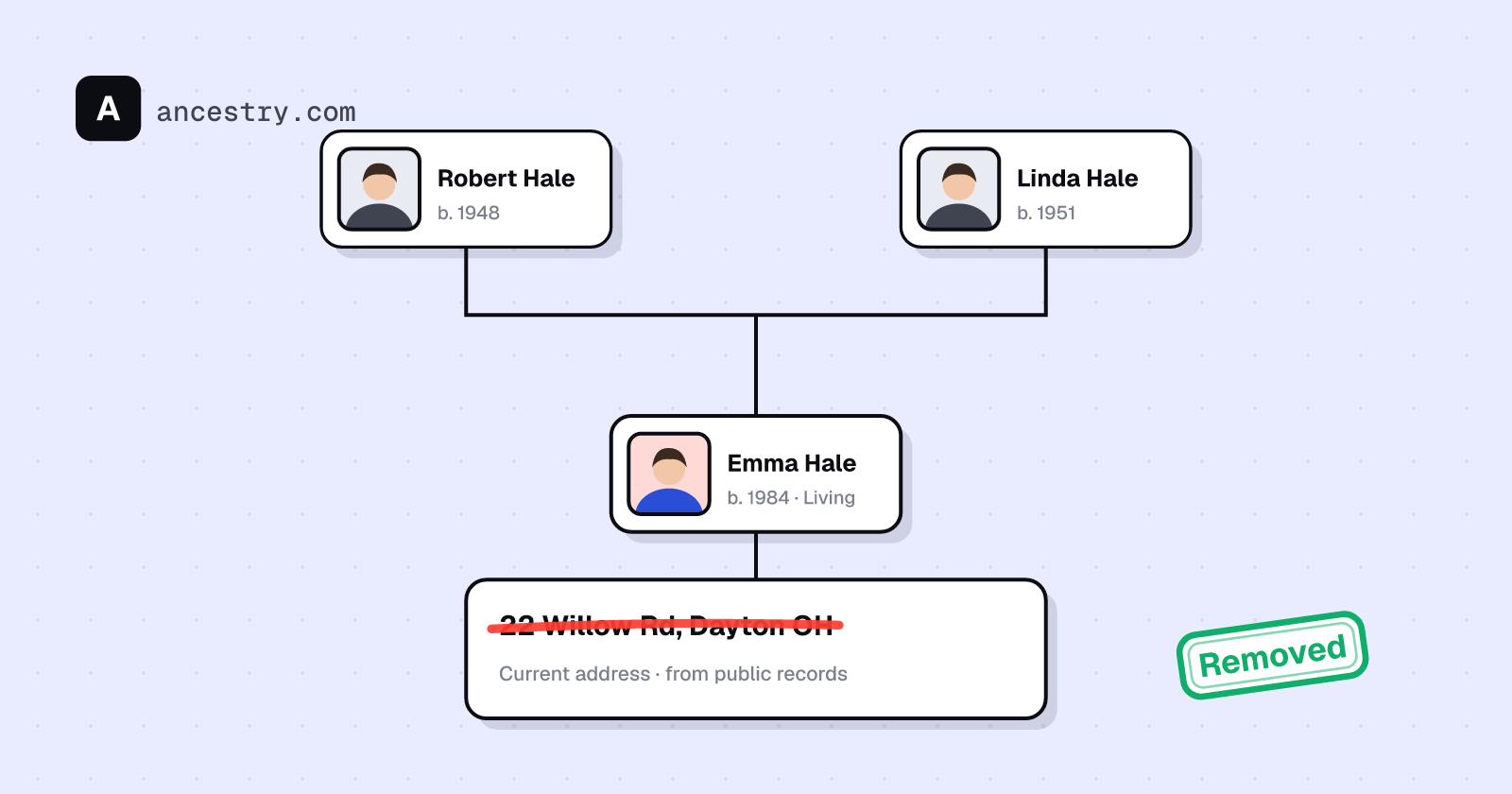
Ancestry will delete records about you if you send it the links. Create a free account (not a free trial), search your name, copy the URLs of every record that's you and email them to privacy@ancestry.com, or submit them one by one on Ancestry's content removal form.
Free first check · Results stay private
Make a free account
Sign up for a free Ancestry account. Pick the free account, not the free trial.
Search your records
Search your name in the sidebar and open every result for a state you've lived in, even old ones.
Copy the URLs
Copy each record's URL, even if the link leads to a sales page.
Send them in
Email the list to privacy@ancestry.com, or use the content removal form for each URL.
Official page: Ancestry content removal form ↗
Ancestry can show your name, birth date, home address, relatives and public records. Ancestry's records include public documents and directories that can show an address and birth date. You can't see everything without paying, but you can still send links for removal.
If you've taken an Ancestry DNA test, that's managed separately in your account settings.
Finds where your records show up
We check Ancestry and the people-search sites that repackage the same records about you.
Files the opt-out for you
We send the removal or opt-out request to Ancestry and handle the confirmation steps.
Rechecks after it refreshes
Record sites re-import data when public files update. We recheck and file again when your information returns.
Yes. Ancestry's opt-out is free. You never need to buy a report or a subscription to remove your information.
Ancestry doesn't publish a timeframe. Search again after a few days, and follow up if your information is still there after two weeks.
It can. Ancestry keeps adding records from public and commercial sources, so a new listing can appear after a move, a new phone number or a data refresh. Check again every few months.
Not right away. Google can show an old snippet until it recrawls the page. Once the Ancestry page is gone, you can ask Google to refresh the result. See our Google removal guide.
Last reviewed . Removal processes change often; if a step looks different, follow the site's current instructions.
What's in a data broker file: contact details, relatives, purchases, inferred traits and location. Where it comes from, and how to cut it.
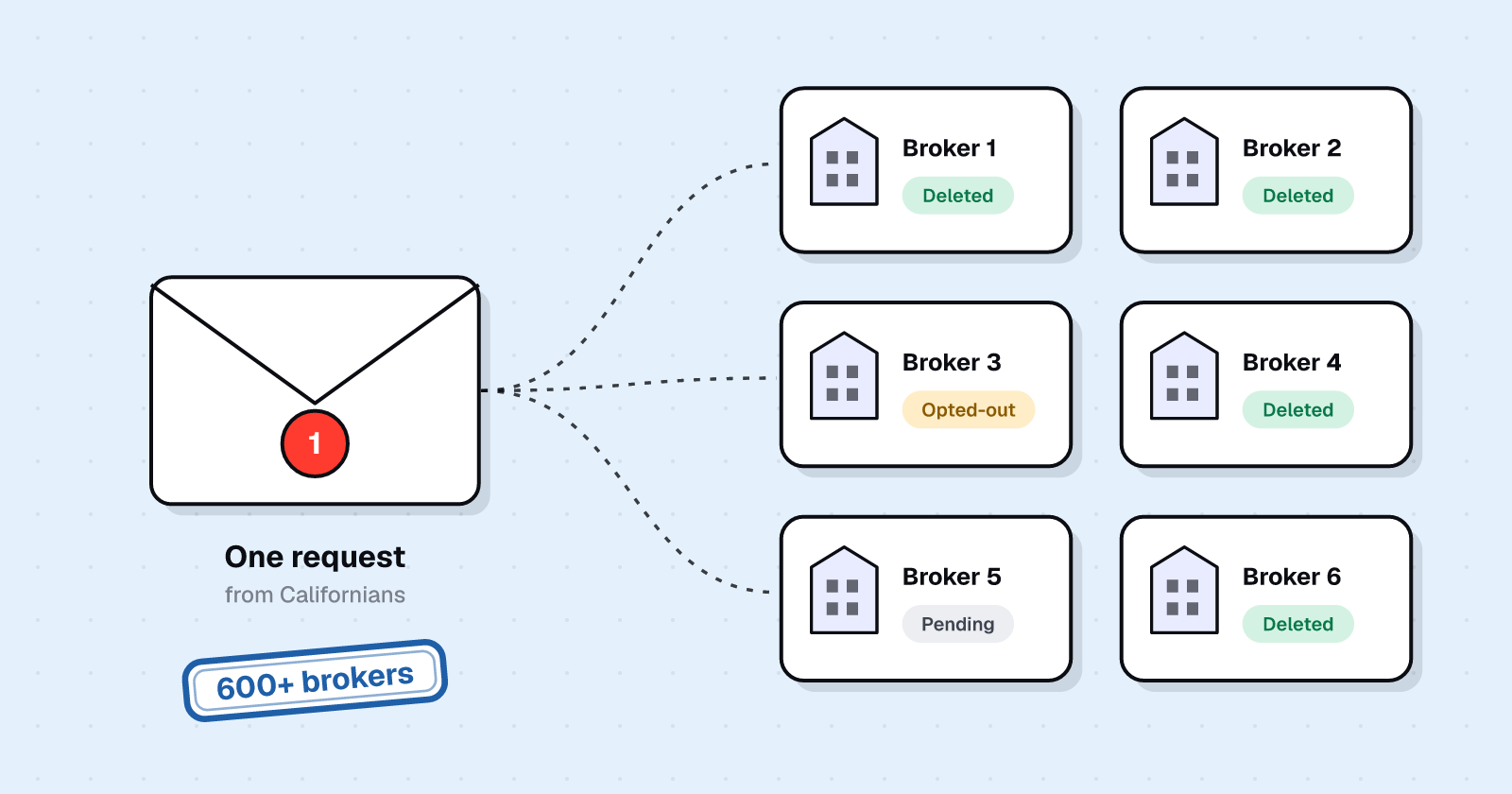
A plain-English walkthrough of California's free DROP data broker deletion tool: who can file, what to enter, what each status means, and the timeline.
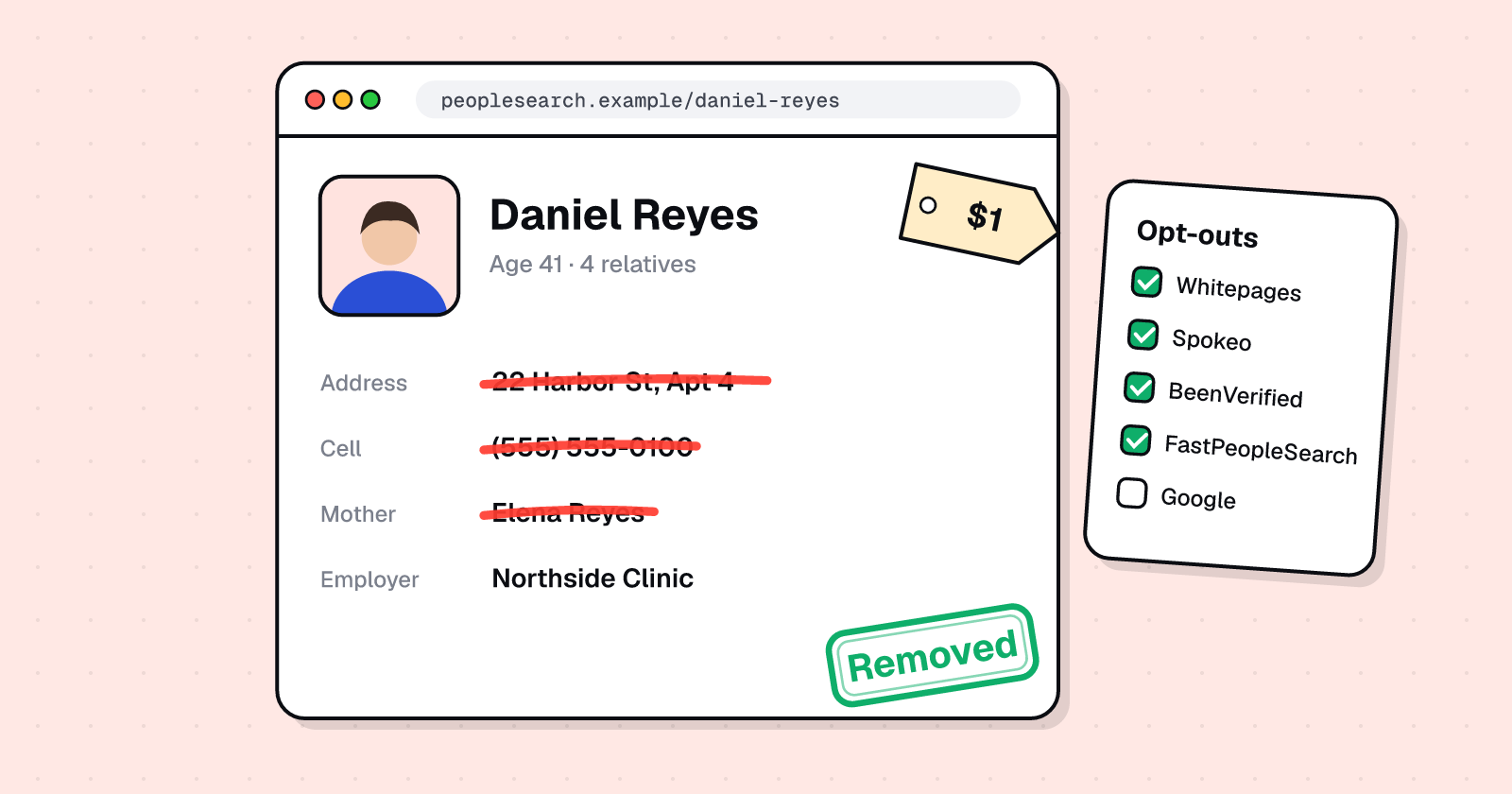
Free step-by-step guide: remove your address from Google, opt out of Whitepages, Spokeo, BeenVerified and 12 more sites, and use California DROP.