How Did Target Know She Was Pregnant?
Target tracked purchases to predict pregnancies and send coupons. Learn how the retailer's Guest ID system worked and how to request your data.

Key takeaways
- Target used purchase tracking tied to your Guest ID to predict pregnancy and estimate due dates, based on about 25 products like unscented lotion and supplements.
- Statistician Andrew Pole found patterns in shopping behavior that could identify pregnant customers, and Target mixed baby coupons with unrelated ads like lawn mowers to make the targeting less obvious.
- The story of an angry father discovering his daughter's pregnancy through Target coupons very likely did not happen the way it is usually told, according to data scientist Eric Siegel.
Last checked: Oct 22, 2026. Based on reporting from 2012-2014. Retailers' tracking practices evolve; check Target's current privacy policy for the latest disclosures.
Maya buys unscented lotion, a large bag of cotton balls, and magnesium supplements at Target. A few weeks later, coupons for baby clothes and cribs arrive in her mailbox. She hasn't told anyone she's pregnant yet. How did Target know?
This is the story that made headlines in February 2012, when the New York Times published an investigation into Target's purchase tracking and pregnancy prediction system. Statistician Andrew Pole analyzed shopping patterns and built a model that could predict which customers were pregnant and estimate their due dates, all from about 25 products tracked through Target's Guest ID system.
If you're wondering how stores track what you buy and what they infer from it, this guide explains what Target did, what's verified and what's not, and how to request your data from retailers under California law.
Watch: How Target tracked shoppers
This video walks through Target's pregnancy prediction system and how retailers track purchase behavior.
What Target did, in plain language
Target's system worked through three parts: tracking, scoring, and targeting.
Part 1: The Guest ID
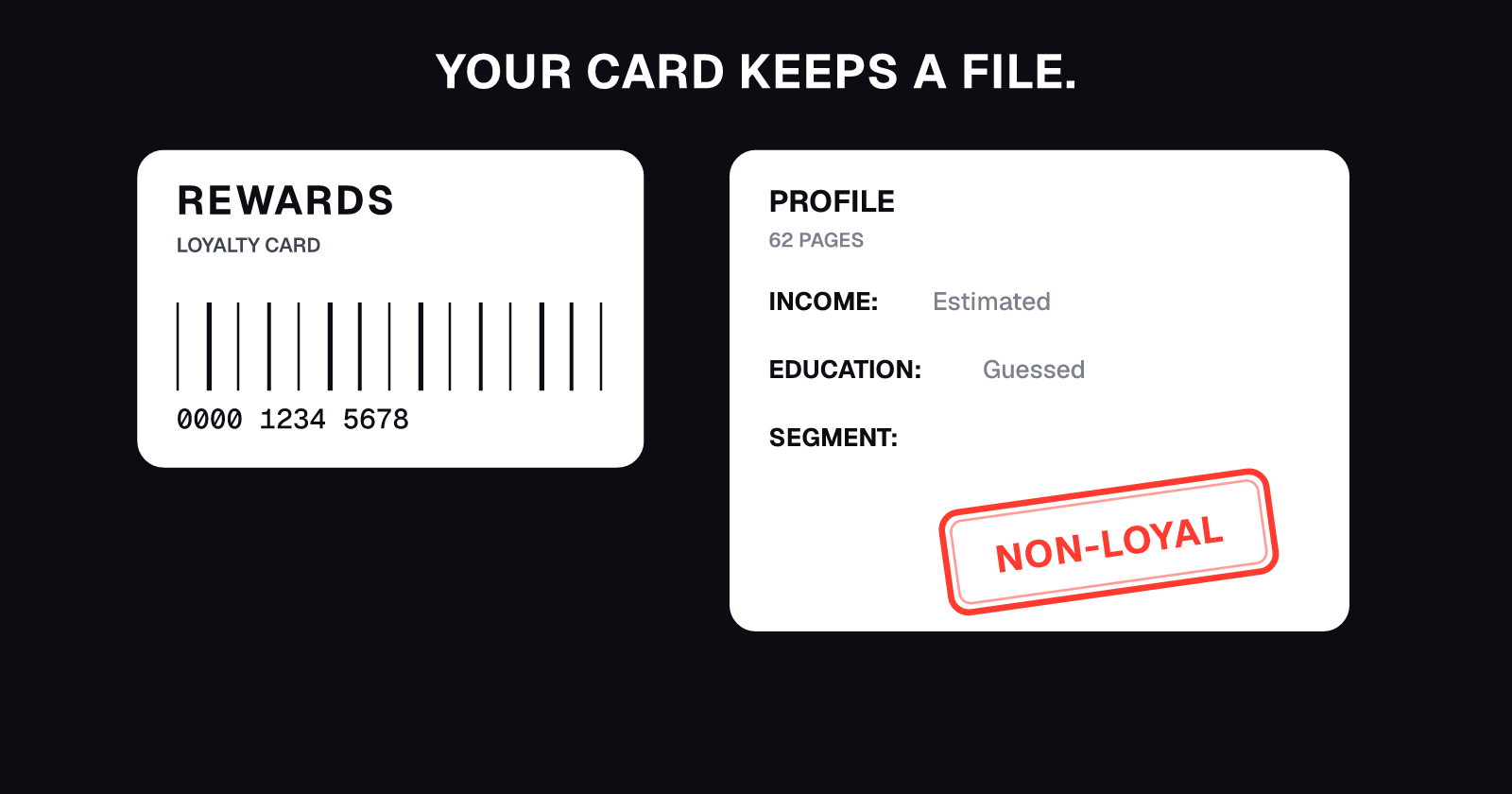
Target assigns each customer a Guest ID, a unique identifier tied to your credit card, name, or email address, as the New York Times reported. When you shop at Target, whether in-store or online, your purchases are logged under your Guest ID. This lets Target:
- Connect your shopping trips over time
- Link your in-store purchases to your online browsing
- Build a profile of what you buy and when
Part 2: The pregnancy prediction score
Target hired Andrew Pole, a statistician, to analyze purchase patterns. Pole's job was to identify pregnant customers early in their pregnancies so Target could send them baby-related coupons before they started shopping at competitors.
Pole examined Target's historical purchase data and identified about 25 products that, when purchased together, indicated a customer was likely pregnant. The New York Times reported specific examples:
- Unscented lotion (pregnant women often become sensitive to smells)
- Calcium, magnesium, and zinc supplements
- Large bags of cotton balls
- Hand sanitizers
- Washcloths
Each purchase of these products contributed to a pregnancy prediction score. If your score crossed a threshold, Target's system flagged you as likely pregnant and estimated a due date based on the timing and sequence of purchases. This let Target send you coupons timed to specific stages of pregnancy.
Part 3: Mixed coupon mailings
Target realized that sending a book of baby coupons to someone who hadn't announced a pregnancy would be creepy. So the company mixed baby-related coupons with unrelated items. A Target executive quoted in the New York Times explained:
"Then we started mixing in all these ads for things we knew pregnant women would never buy, so the baby ads looked random. We'd put an ad for a lawn mower next to diapers. We'd put a coupon for wineglasses next to infant clothes."
The goal was to make the targeting less obvious. If you received a mailer with a coupon for wineglasses next to infant clothes, it would look like random selection rather than precise tracking.
The disputed father story
The most widely shared version of the Target pregnancy story involves an angry father confronting a Target manager. The father said his teenage daughter had received baby coupons, and he demanded to know why Target was encouraging her to get pregnant. The manager apologized. A few days later, the father called back to apologize himself: his daughter was indeed pregnant, and Target had known before he did.
This story was included in the New York Times article and has been repeated in countless privacy discussions since. However, data scientist Eric Siegel said the father story very likely did not happen the way it is usually told.
What this means: The pregnancy prediction system itself is well documented. Andrew Pole spoke to reporter Charles Duhigg until Target told him to stop, the article quotes an unnamed Target executive, and Pole first presented the work at Predictive Analytics World in 2010. But the specific anecdote about the father and the teenage daughter should be treated skeptically.
What the law says (as of October 2026)
Retailers like Target can track purchases and make inferences unless a law restricts them. The relevant law for most U.S. consumers is California's CCPA (California Consumer Privacy Act) and similar state privacy laws.
California residents have three rights under the CCPA:
Right to know. You can request a copy of the personal information Target has collected about you, including inferences Target has made, such as pregnancy predictions or household income estimates.
Right to delete. You can request that Target delete your personal information. Target must comply unless it needs the data for a specific reason, such as completing a transaction or complying with a legal obligation.
Right to opt out of sale or sharing. You can tell Target to stop selling or sharing your personal information. Selling and sharing for cross-context behavioral advertising are separate categories under California law.
How to exercise these rights at Target:
Find Target's privacy page. Go to target.com and search for "privacy policy" or visit https://www.target.com/c/target-privacy-policy/-/N-4sr7p directly.
Request your data. Look for a link labeled "Request My Personal Information" or "CCPA Rights." Target will ask you to verify your identity, usually by confirming your email address or account details. Target has 45 days to respond.
Request deletion. On the same page, submit a deletion request. Target must delete your data unless an exemption applies, such as completing a purchase you made or keeping records for legal compliance.
Opt out of sale. Look for "Do Not Sell or Share My Personal Information." This tells Target to stop sharing your data with advertisers and data brokers.
What to look for in Target's response: When Target sends your data report, check the "inferences" or "analytics" section. This is where Target would disclose predictions it has made about you, such as estimated household income, likely interests, or life events like pregnancy or moving.
If Target's report doesn't include inferences, email Target's privacy team and ask specifically: "Does Target make inferences about me, such as pregnancy predictions or household demographics? If so, include them in my data request."
For non-California residents:
If you don't live in California, check whether your state has a privacy law. Virginia, Colorado, Connecticut, Utah, and several other states passed laws similar to the CCPA between 2021 and 2026. These laws typically give you the right to access, delete, and opt out, though the details vary.
If your state doesn't have a privacy law, you can still contact Target and ask for your data, but Target is not legally required to comply.
The California Attorney General's CCPA page is at oag.ca.gov/privacy/ccpa.
What other retailers are doing
Target's pregnancy prediction system became famous because of the New York Times story, but Target is not the only retailer tracking purchases and making inferences. This is standard practice in retail analytics as of 2026.
What retailers typically track:
| What they see | What they infer |
|---|---|
| Purchases of baby products | Pregnancy, infant in household |
| Purchases of senior care items | Elderly household member |
| Purchases of moving supplies or change of address | Recent move, new home |
| Sudden increase in pet supplies | New pet |
| Alcohol, tobacco, or junk food purchases | Lifestyle and health risk categories (used for targeted ads) |
Retailers combine this with data from loyalty programs, credit card transactions, and data brokers. If you use a store loyalty card, the retailer links your purchases to your name, address, and phone number. If you use a credit card without a loyalty card, the retailer can still link purchases to your credit card number.
The Guest ID beyond Target
Target's Guest ID is one example of a broader category: retail customer identifiers. Every major retailer uses some version of this. Walmart has a similar system. Amazon tracks everything you browse, search for, and buy. Grocery stores with loyalty cards do the same.
How to limit retail tracking:
Pay cash. Cash purchases are anonymous unless you use a loyalty card.
Don't use loyalty cards. Loyalty cards are the most direct tracking tool. The discounts and rewards come at the cost of detailed purchase tracking.
Use a separate credit card for sensitive purchases. If you want to prevent a retailer from linking a pregnancy test or medication purchase to your main profile, use a different credit card or a prepaid card.
Opt out under state law. If you live in California or another state with a privacy law, submit opt-out and deletion requests to the retailers you shop at most.
Check privacy policies. Retailers must disclose what data they collect and who they share it with. Look for sections on "data sharing," "advertising partners," and "inferences."
Why this matters in 2026
The Target story is from 2012, but the underlying issue has gotten more complex. Retailers now combine purchase tracking with location data (from apps), browsing history (from online shopping), and data broker profiles. If you buy baby products at Target and then browse parenting blogs on your phone, advertisers can connect those two behaviors and target you with even more precise ads.
The increase in state privacy laws is a response to this. If you're working on removing your personal information from data brokers and limiting tracking, adding retail opt-outs is part of the same effort. Our main guide, how to remove your personal information from the internet, covers the full process.
A realistic routine for retail privacy
Today: Visit Target's privacy page (and the privacy pages of other stores you shop at frequently). Request your data and submit an opt-out request.
When your data report arrives: Check the inferences section. If Target or another retailer has made predictions about you (pregnancy, income, household composition), note them. If inferences aren't included, email and ask.
Every six months: Re-check whether you're still opted out. After you opt out, a business must wait at least 12 months before asking you to opt back in.
When shopping: If you're buying something sensitive, pay cash or use a prepaid card to avoid linking it to your profile.
For online shopping: Use browser extensions like Privacy Badger or uBlock Origin to block tracking scripts. Clear cookies regularly, or use a browser with built-in tracking protection like Firefox or Brave.
These steps take about 20 minutes the first time and a few minutes for each check-in. The goal isn't to eliminate all tracking (that's not realistic unless you stop shopping entirely), but to reduce how much retailers know about you and how much they share with advertisers and data brokers.
Sources
Charles Duhigg, "How Companies Learn Your Secrets," New York Times (February 16, 2012). https://www.nytimes.com/2012/02/19/magazine/shopping-habits.html
Gregory Piatetsky, "Did Target Really Predict a Teen's Pregnancy? The Inside Story," KDnuggets (May 2014). https://www.kdnuggets.com/2014/05/target-predict-teen-pregnancy-inside-story.html
California Attorney General, "California Consumer Privacy Act (CCPA)." https://oag.ca.gov/privacy/ccpa
Target Corporation, "Target Privacy Policy." https://www.target.com/c/target-privacy-policy/-/N-4sr7p
UndoLeak erases your data from data brokers and keeps it off. Retail tracking is one piece. We handle the rest: people-search sites, Google results, leaked photos, and ongoing monitoring so your information stays private.
Frequently asked questions
How did Target predict pregnancy?
Target tracked purchases linked to your Guest ID (created from your name, credit card, or email). Statistician Andrew Pole identified about 25 products that indicated pregnancy, including unscented lotion, calcium supplements, magnesium supplements, zinc supplements, and large bags of cotton balls. These purchases generated a pregnancy prediction score and due-date estimate.
What is Target's Guest ID?
Target's Guest ID is a unique identifier the retailer assigns to track your purchases across visits. Target creates it from information like your name, credit card number, or email address. It lets Target connect your in-store purchases with online browsing and build a profile of your shopping habits.
Is the Target pregnancy story true?
The core story about Target predicting pregnancies is documented in a 2012 New York Times investigation. However, the widely shared story about an angry father confronting a Target manager after his daughter received baby coupons very likely did not happen the way it is usually told, according to data scientist Eric Siegel.
What were the 25 products Target used?
The New York Times reported that Andrew Pole's model tracked about 25 products. Confirmed examples include unscented lotion, calcium supplements, magnesium supplements, zinc supplements, large bags of cotton balls, hand sanitizers, and washcloths. The complete list was not disclosed.
Does Target still use pregnancy prediction?
The New York Times story was published in 2012. Target has not publicly disclosed whether it still uses pregnancy prediction models, but retailers continue to use purchase tracking and predictive analytics. The Guest ID system and purchase-based targeting remain standard retail practices as of 2026.
Can I opt out of Target's tracking?
California residents can request that Target stop selling or sharing their personal information under the CCPA. Visit Target's privacy page, request your data to see what inferences Target has made, and submit deletion and opt-out requests. Target's privacy policy is available at https://www.target.com/c/target-privacy-policy/-/N-4sr7p.
undoleak Team