Does Kroger Sell Your Data? What Your Loyalty Card Really Collects
One Kroger shopper got his 62-page profile. It guessed his income and education. Almost all was wrong. What does your card track?

Key takeaways
- In 2025, Consumer Reports obtained one Kroger shopper's 62-page loyalty profile through Oregon's privacy law. It estimated his income and education, inferred he'd want a cruise, and tagged him non-loyal. Almost everything in it was wrong.
- Kroger acknowledged in writing that the shopper's data may have been sent to more than 50 companies, including two tobacco companies, a large data broker, financial institutions, and analytics and marketing firms.
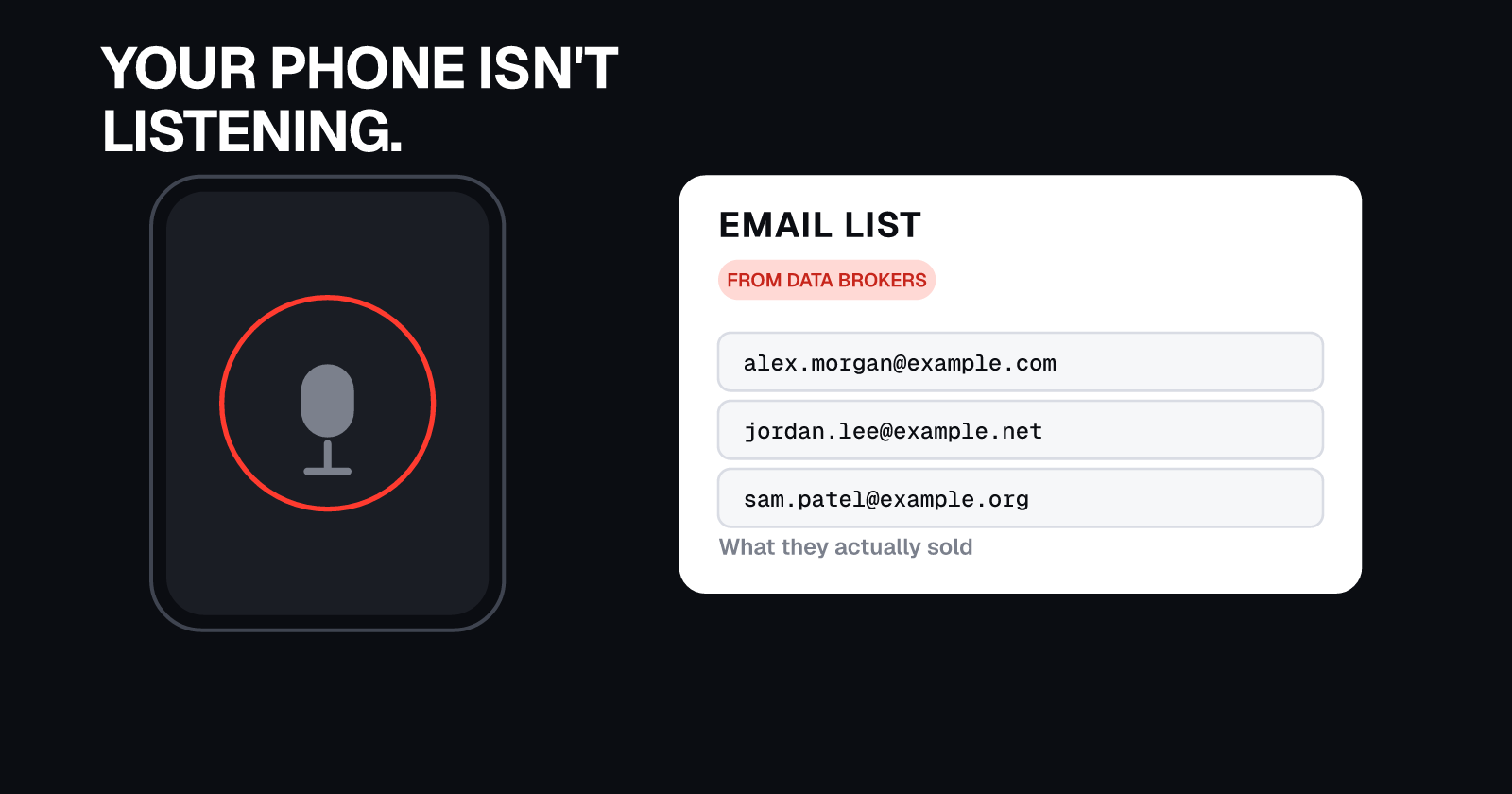
- Many grocers enrich loyalty sign-up data with third-party broker information, potentially including race, ethnicity, age, finances, employment and online activities. Kroger's data unit, 84.51°, claimed in a marketing brochure to have collected over 2,000 variables on customers.
- You can request a copy of your loyalty card data and opt out of data sales through your store's privacy policy. Many US states give you these rights, and some companies honor requests nationwide.
Last checked: Oct 26, 2026.
You scan your loyalty card at checkout. The register prints coupons matched to what you buy. It feels personalized. What you might not know: the store keeps a file on you.
In 2025, Consumer Reports looked at one Kroger shopper's loyalty profile. It was 62 pages long.
What one shopper's Kroger file contained
In May 2025, Consumer Reports published an investigation based on a Kroger customer's profile, obtained through Oregon's new data and privacy law.
What the profile included:
- An estimated annual income (the estimate was wrong, the shopper made much more)
- Education level (listed as high school degree when he had graduated from college)
- Inferred preferences (the profile said he was very likely to want to go on a cruise, he doesn't)
- A "non-loyal" label despite years of shopping at Kroger
Consumer Reports noted that almost everything in the 62-page profile was wrong.
Where it went. Kroger acknowledged in writing to the shopper that his report may have been sent to more than 50 different U.S. companies, including:
- Two tobacco companies
- One of the country's largest data brokers
- Financial institutions
- Analytics and marketing firms
Kroger stated to Consumer Reports: "Kroger does not personalize prices on its products," clarifying that it personalizes offers and discounts, not base prices.
How grocery stores build these profiles
They start with what you give them
When you sign up for a loyalty card, you typically provide:
- Your name
- Your address
- Your phone number
- Your email address
Then the store links every purchase you make to that profile.
They add data from brokers
In February 2023, The Markup reported that many grocers systematically "enrich" the information you provide with additional data purchased from third-party data brokers.
What gets added, according to The Markup:
- Race and ethnicity
- Age
- Financial information
- Employment details
- Online activities
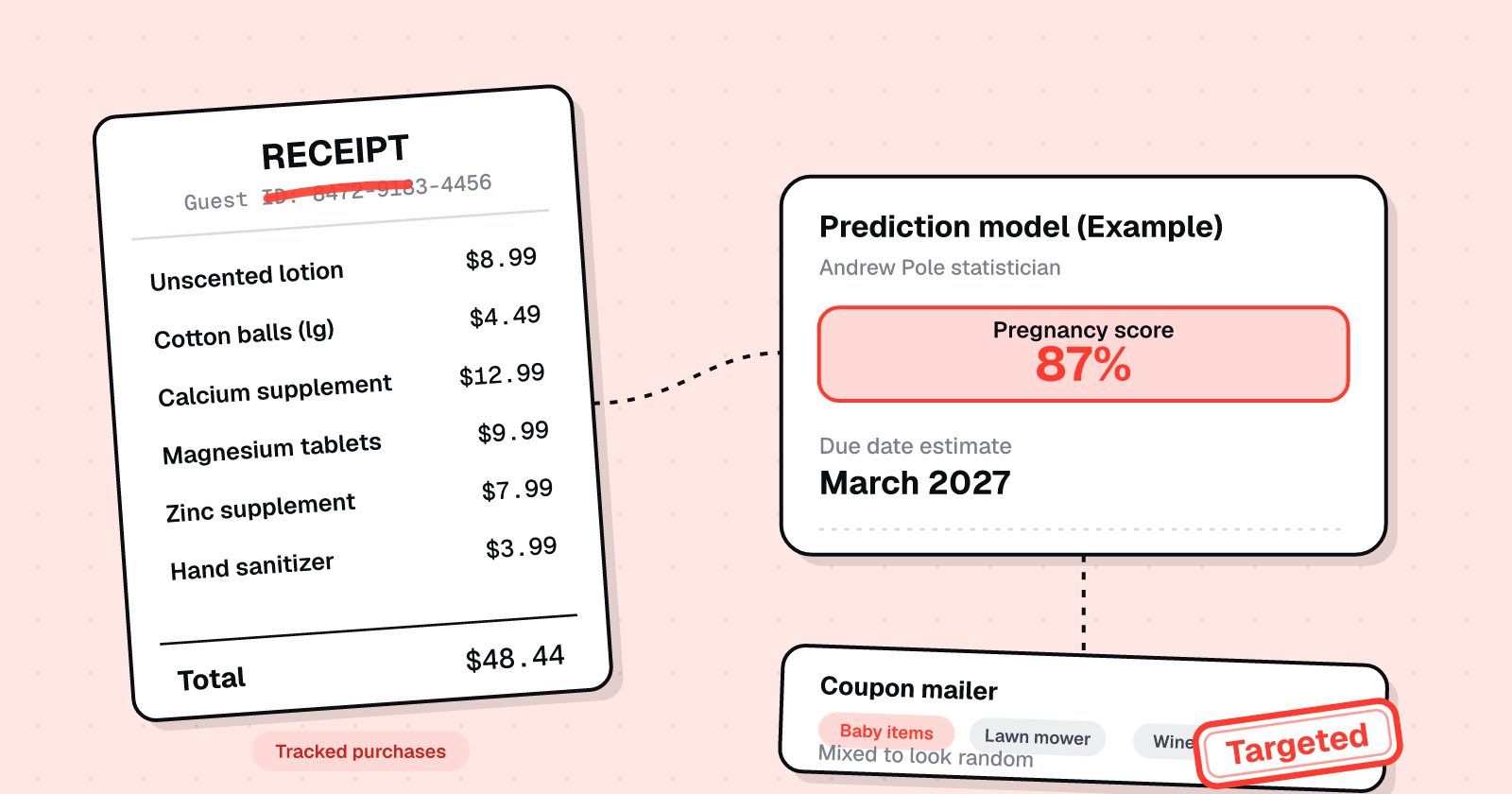
This lets stores infer details about you that you never directly provided.
They track thousands of variables
84.51° is Kroger's in-house data unit. According to The Markup, an 84.51° marketing brochure titled "Taking the Guesswork Out of Audience Targeting" claimed: "We have collected over 2,000 variables on customers."
The unit's name comes from the longitude of Kroger's Cincinnati headquarters.
The surveillance pricing context
In January 2025, the FTC released initial findings from its surveillance pricing study, which examined how companies use personal data to set individualized consumer prices.
The study was conducted under Section 6(b) of the FTC Act and covered multiple industries. It did not name specific grocery retailers or make findings about whether particular companies engage in surveillance pricing.
The FTC described surveillance pricing as using detailed consumer data to set personalized prices, noting that this practice raises concerns about potential discrimination and privacy.
This is separate from Kroger's statement that it does not personalize product prices.
How to request your data and opt out
Many U.S. states give residents the right to know what personal information companies collect about them and the right to opt out of data sales. Consumer Reports noted that as of 2025, 13 states had opt-out rights, with more states adding these protections by 2026. Some companies honor these requests nationwide, regardless of where you live.
Step 1: Find your store's privacy request page
Search your store's name plus "privacy request" in Google, or look for a "Privacy Policy" or "Your Privacy Rights" link at the bottom of the store's website.
For Kroger specifically:
- Visit kroger.com/i/privacy-policy/rights-and-choices
- Or call Kroger's customer contact center at 1-800-576-4377
Step 2: Request a copy of your data (Right to Know)
This is sometimes called a "Right to Access" or "Right to Know" request. The store will verify your identity (Kroger asks for your name, address and Loyalty ID) and provide a copy of what they have on file.
Expect the response within a few weeks. Some states require companies to respond within 45 days.
Step 3: Opt out of data sales and sharing
Look for options labeled:
- "Do not sell or share my personal information"
- "Opt out of sale"
- "Right to opt out"
According to Kroger's privacy policy, loyalty members can opt out of the sale of their information through the customer contact center. The policy notes that some loyalty features may change after you opt out.
Step 4: Consider requesting deletion or correction
Many privacy laws also give you the right to:
- Delete your data (though this might mean losing your loyalty account)
- Correct inaccurate information (useful if your profile has wrong details like the Consumer Reports example)
The trade-off
Opting out may affect some loyalty features. Personalized coupons might become less targeted, or you might receive generic offers instead of ones matched to your purchase history.
This is the cost of limiting data collection: less personalization, but more privacy.
What about other grocery stores?
Kroger is not unique. According to The Markup's 2023 investigation, many major grocery chains use similar loyalty data practices.
Other grocers with loyalty programs:
- Albertsons (which owns Safeway, Vons, Jewel-Osco, and others)
- Ahold Delhaize (Food Lion, Giant, Stop & Shop)
- Target
- Walmart
Each has its own privacy policy. The steps above apply to any store: find their privacy policy, request your data, and opt out of sales.
What you can do without a loyalty card
If you want to shop without being tracked:
- Pay cash without using a loyalty card. Cash purchases aren't linked to your identity unless you provide a card or phone number.
- Use a generic loyalty number. Some stores let you use a phone number instead of scanning a card. You could use a phone number that isn't yours (though this may violate the store's terms of service).
- Accept that you'll pay more. Loyalty discounts can be significant. The trade-off is direct: tracked data or higher prices.
At many stores, loyalty pricing has become the default, with non-members paying substantially more. This makes avoiding tracking expensive.
Sources
Consumer Reports, Derek Kravitz, "Inside Kroger's Secret Shopper Profiles: Why You May Be Paying More Than Your Neighbors" (May 21, 2025). https://www.consumerreports.org/money/questionable-business-practices/kroger-secret-grocery-shopper-loyalty-profiles-unfair-a1011215563/
The Markup, Jon Keegan, "Forget Milk and Eggs: Supermarkets Are Having a Fire Sale on Data About You" (February 16, 2023). https://themarkup.org/privacy/2023/02/16/forget-milk-and-eggs-supermarkets-are-having-a-fire-sale-on-data-about-you
Kroger privacy policy, "Your Rights and Choices." https://www.kroger.com/i/privacy-policy/rights-and-choices
Federal Trade Commission, "FTC Surveillance Pricing Study Indicates Wide Range of Personal Data Used to Set Individualized Consumer Prices" (January 17, 2025). https://www.ftc.gov/news-events/news/press-releases/2025/01/ftc-surveillance-pricing-study-indicates-wide-range-personal-data-used-set-individualized-consumer
UndoLeak erases your data from data brokers and keeps it off. Loyalty card data is one source. We handle the rest: people-search sites, Google results, leaked information, and ongoing monitoring so brokers can't rebuild your profile. Run a free scan to see where your information is listed right now.
Not affiliated with Kroger or 84.51°.
Frequently asked questions
Does Kroger sell my loyalty card data?
Kroger acknowledged in writing that one shopper's data may have been sent to more than 50 companies. According to Consumer Reports (2025), these included two tobacco companies, a large data broker, financial institutions, and analytics and marketing firms. Kroger states it does not personalize prices on its products, only offers and discounts.
What information does Kroger collect about me?
According to Consumer Reports (2025), Kroger's loyalty profiles include estimated income, education level, purchase history, and inferred preferences. The Markup (2023) reported that many grocers enrich loyalty data with third-party broker information, potentially including race, ethnicity, age, finances, employment and online activities. Kroger's data unit, 84.51°, claimed to have collected over 2,000 variables on customers.
How do I see what data Kroger has on me?
Search your store's name plus "privacy request" or visit Kroger's privacy policy at kroger.com/i/privacy-policy/rights-and-choices. Request a copy of your personal information through their customer contact center. They verify identity with your name, address and Loyalty ID.
Can I opt out of Kroger selling my data?
Yes. According to Kroger's privacy policy, loyalty members can opt out of the sale of their information by contacting Kroger's customer contact center at 1-800-576-4377. You'll need to verify your identity with your name, address and Loyalty ID. Some loyalty features may change after you opt out.
Does my grocery store do surveillance pricing?
In January 2025, the FTC released initial findings from its surveillance pricing study showing that companies in various industries use a wide range of personal data to set individualized prices. The study did not name specific companies or make findings about particular retailers.
What's 84.51° and what does it do with my data?
84.51° is Kroger's in-house data unit. According to The Markup (2023), a marketing brochure from 84.51° claimed they have collected over 2,000 variables on customers. The unit's name comes from the longitude of Kroger's Cincinnati headquarters.
undoleak Team